Focus on getting productivity moving over long term, says former BoC deputy governor Mendes
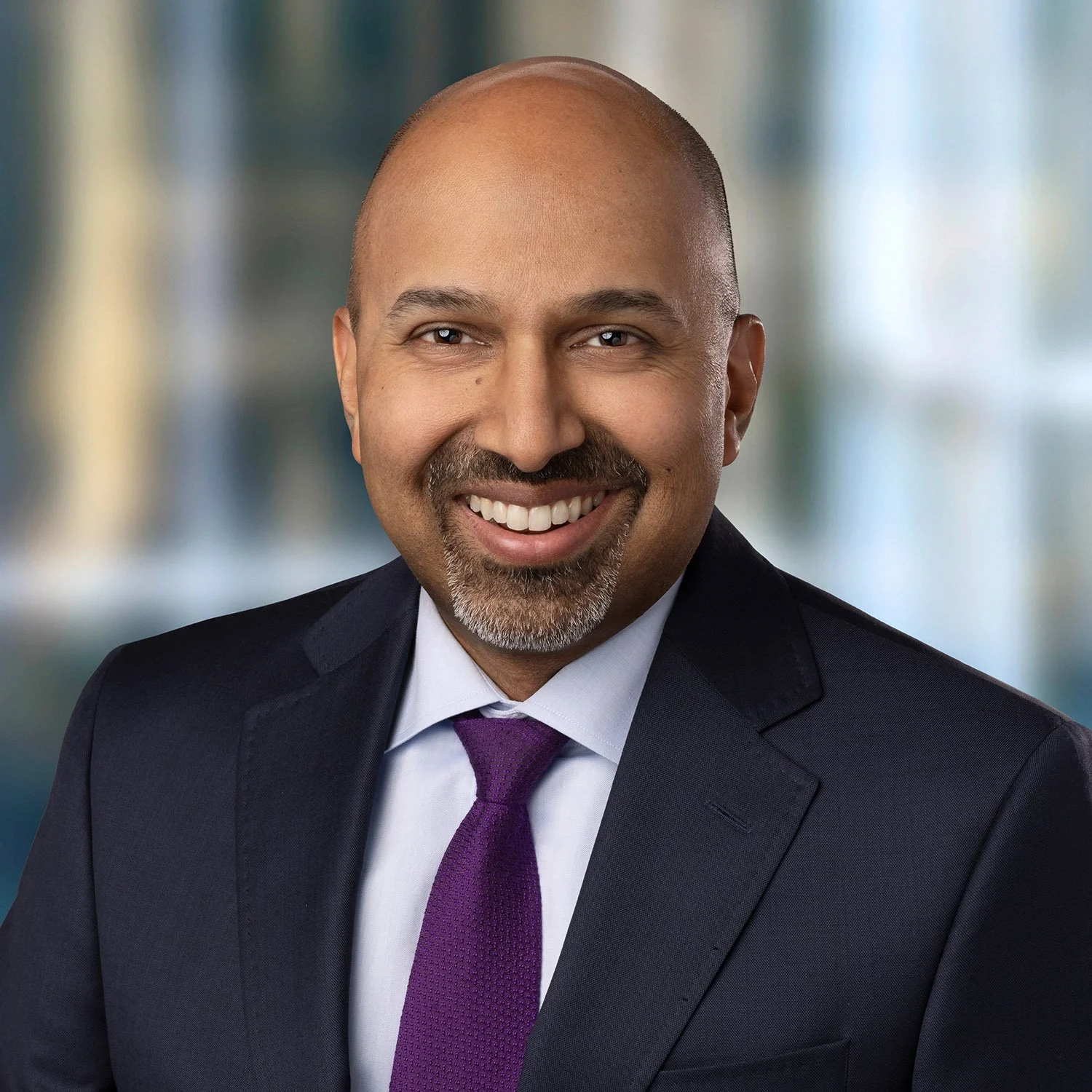
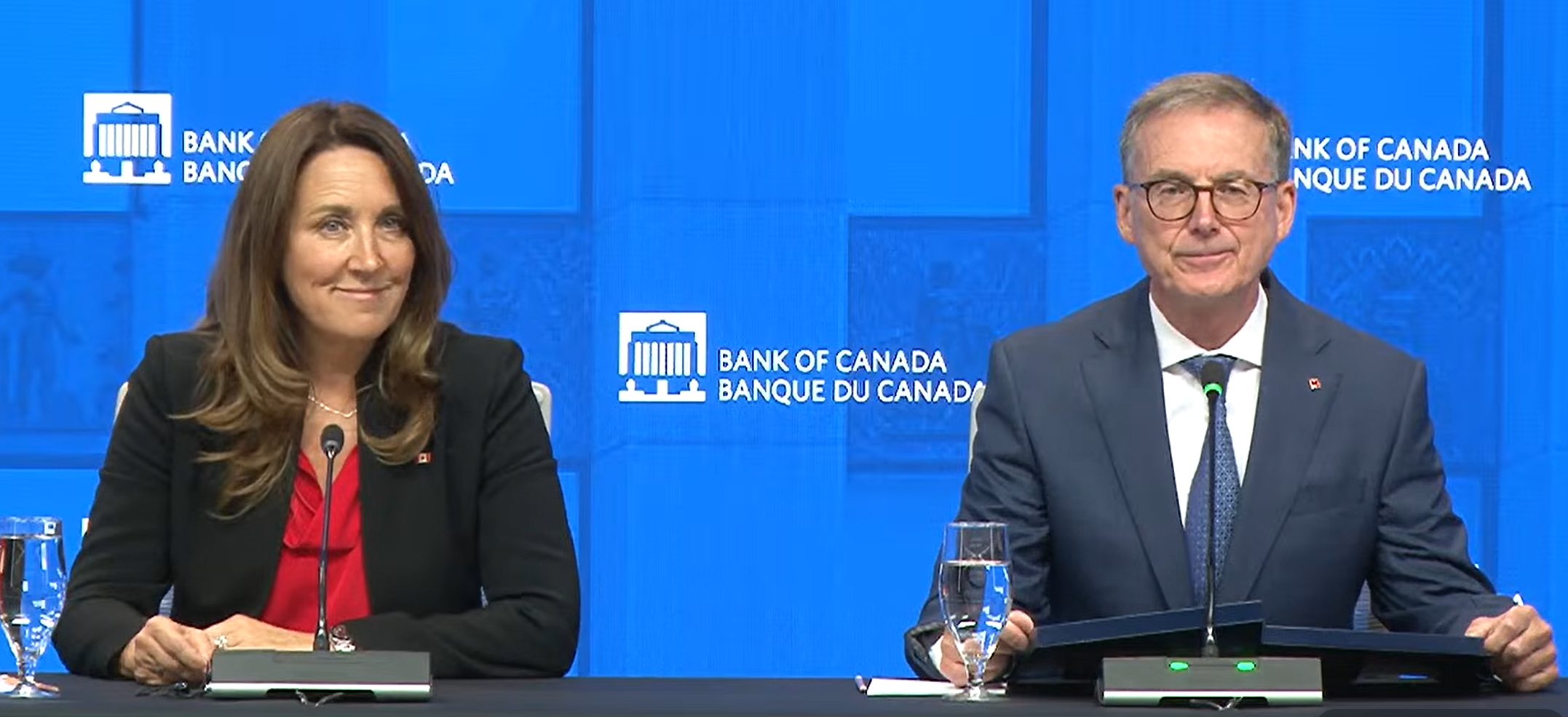
Rhys Mendes recently retired from the Bank of Canada as deputy governor, after 22 years. ‘The thing I'm most proud of is the people at the bank. I had the opportunity to hire, to mentor, and to promote a lot of people in the organization and their impact will outlast mine and outweigh mine by a lot, and that's something that I really value,’ he says.
Solving Canada’s productivity challenge is the most important issue facing policymakers today, says former deputy governor of the Bank of Canada Rhys Mendes.
“Economic projections get revised up and down, but the really worrying thing is productivity. It's been a central challenge for the Canadian economy for a long time. We've lagged our peers for years,” Mendes, who recently retired from the Bank of Canada after 22 years, told Means & Ways in an exit interview. “I think getting productivity moving again is probably the single biggest thing Canada could do to raise living standards over the next decade, and that's the lens I'd encourage people to keep coming back through. … The thing we really need to be focused on is getting productivity moving over the longer term.”
Focusing on business investment in machinery, equipment and technology is one key solution to solving the challenge, he said. “Canadian firms have consistently invested less per worker than their U.S. counterparts. That gap has widened over time, so there's the potential for policy to shift incentives to get businesses investing more in Canada,” he said, noting a vicious circle of weak business investment. “[It] leads to weak productivity, which leads to slow wage growth, which weighs on demand, which then discourages the next round of investment. That cycle has been running in Canada for a while. I think there are a few things we can focus on, and I think the good thing is that the conversation in Canada has become increasingly focused on solving the productivity challenge.”
Another area to focus on, he said, is competition. When markets are protected, businesses don’t have incentives to compete by adopting new technology or making investments where needed to be more innovative. This adds to the problem Canada faces of weak commercialization despite the world-class research and development that takes place here.
“AI is the obvious thing right now, right? Geoff Hinton was doing fundamental research on AI at the University of Toronto, but the commercialization of AI is happening mainly in the United States, and so we need to get better at that,” he said. “I think we need to make sure that we're making maximum use of our human capital. Part of that means credential recognition across provinces. If a worker whose credentials aren't recognized when they move across provinces, for that worker that's a productivity loss, and that's a productivity loss for the overall economy too.”
Mendes served as deputy governor from July 2023 until April 2026, where he oversaw the bank’s economic and financial research and analysis of international economic developments. Serving on the bank’s Governing Council, he shared responsibility for setting monetary policy, safeguarding financial system stability and guiding the bank’s strategic priorities. Mendes, who holds a PhD in economics from the University of Toronto, joined the bank in 2004.
“It's never easy to leave a place you've been at for more than two decades. I joined the bank as a young economist, I left as a deputy governor. It's a really long arc over that period. The bank really became like family to me, both figuratively and literally,” he said, noting that while many colleagues became like family, at one point, his brother and wife also worked at the bank at the same time as him.
He called the Bank of Canada “a special place” where he was “in awe of the senior leaders” who took the time to listen to him and his ideas on the latest research and innovative “cutting-edge” economic models. “It struck me that people were willing to actually talk about that stuff, engage on that stuff, and it's a reflection of the rigour that the bank approaches its work with,” he said, adding that as he looks toward the next chapter in his career, he feels only gratitude.
“Not many people get to spend their career working on problems this interesting with this much consequence for Canadians and alongside colleagues of this calibre,” he said.
He served as the bank’s G7 and G20 deputy, a role he said he was proud to hold. “With the end of Canada's G7 presidency last year … it seemed like a natural time to turn the page,” he said.
Mendes spoke to M&W on June 8 about the state of the economy, working for former bank governor Mark Carney, what’s keeping him up at night and more. The following Q&A was edited for length.
M&W: What's your assessment of the state of Canada's economy at the moment, given everything you know?
RM: I don't think the ‘technical recession’ label is very helpful. The important thing to keep in mind is that we've had a period of tepid growth in Canada, and the question now is, are we emerging from that? And it's not really clear. The recent data are mixed. We had the negative surprise in the first quarter GDP, which suggests there's more slack in the economy than perhaps we thought. At the same time, the most recent labour market data was strong. There was broad-based strength in the labour market in May, but the labour market data, the jobs data, is volatile month to month, so you need to look at the last few months together. When you look at the last few months together, the May strength followed several months of weakness. Now the unemployment rate is still above its recent trough, the employment to population ratio is still below its recent peak, and overall there's still some slack in the labour market, and in the economy more broadly. There are, of course, downside risks hanging over the economy as we go forward. I think we're at a moment where we're going to have to watch to see if we are emerging from that period of tepid growth.
At the same time, on inflation, my reading is it's sort of as benign as you could expect, given what's going on in the world. Obviously, the war in the Middle East has pushed up oil prices, and that's pushed up headline inflation, because gasoline prices are higher. At the same time, if you look at the bank’s core measures of inflation, or if you look at CPI inflation, excluding gasoline, these have been decelerating. The core measures are sitting around 2%. … That's a good thing, because I think it means that most likely the bank can stay on the sidelines, and that's good for Canadians.
M&W: When you look back at your career, what are you most proud of?
RM: You know, a lot happened in my time in Ottawa. There was the most severe financial crisis since the Great Depression, the worst pandemic in a century, the largest inflation shock in decades, two trade wars, and a whole lot more. And I also got to be involved in five renewals of the bank's inflation target over that period. I played a role in its international engagement as the bank's G7 deputy. I'm really proud of the role the bank played in contributing to Canada's G7 presidency last year. It was not an easy year for international cooperation, but we did find a way to keep the contentious issues on the table while at the same time making progress on the areas where we had broader agreement. The thing I'm most proud of is the people at the bank. I had the opportunity to hire, to mentor, and to promote a lot of people in the organization and their impact will outlast mine and outweigh mine by a lot, and that's something that I really value.
M&W: You just mentioned you've had to lead through several economic turbulences, from a recession, COVID, geopolitical uncertainty. How did you navigate those times, and are there any lessons that you learned from them?
RM: Each crisis has been different, but I think there are a few lessons that carry across them. First, I think you've got to have some humility about what you know in real time. In 2008, in the early days of COVID, and again in 2025 with the abrupt shift in U.S. trade policy, in every case, the data are lagging. The signals that you're getting are noisy, and then the structure of the economy is shifting underneath you, so you know the temptation is to wait for certainty, right? But you can't wait. Policy just has to be made with incomplete information, and that means being honest within the organization, with colleagues, but also with the public about what you don't know.
Number two is the value of a clear mandate. In the worst moments, when markets are stressed, when the political environment is noisy, I think the bank's inflation targeting framework has really served as a fixed point by which the bank can navigate and by which people can understand what the bank is doing. In 2022, when inflation hit 8%, Canadians didn't love what the bank had to do. Raising rates aggressively is really painful for people, but the 2% target was credible, so you know people's inflation expectations didn't become unmoored and we got inflation back to target as a result without causing a recession. It's important, I think, to keep in mind that credibility is central, and that trust was earned over decades, but it can be squandered really quickly if you're not careful. It's something that I think is important for policymakers to really guard closely.
And then the third thing I'd say is … communication is really part of the policy. When the world is more volatile, people need to understand not just what you're doing, but why you're doing it. That was part of the thinking behind the speech I gave last October on separating the signal from the noise — the inflation numbers are going to be bumpier in this new environment. If we don't explain how we read through them, markets and households will draw their own conclusions and potentially different conclusions from what the bank thinks, and potentially lose confidence.
M&W: You mentioned your speech last October. In it, you said, “The world around us is changing. The abrupt swings in US trade policy have shocked Canada’s economy. And we’re facing structural change and rising geopolitical conflict. With these shifts come the potential for more and larger shocks. That means greater volatility in prices and the possibility of higher inflationary pressures. In this environment, cutting through the noise is more important than ever.” How do you think businesses and Canadians in general can cut through this noise?
RM: It's a great question. You're right that the principle I was describing applies not only to central banks, but also to households and businesses. The first thing I'd say is, don't overreact to any single month’s number: monthly inflation data, monthly GDP, monthly jobs — they bounce around from month to month. Some of that movement is, of course, real and represents the underlying trend, but a lot of it is month-to-month noise. So, if your long-run plan is built around an expectation, say that inflation in Canada hovers around 2% over time, that's still a reasonable anchor. You know, we've gone through the worst inflation episode in decades and came back to target, so that framework worked. Families making decisions about their mortgage, their savings, whether to take a job, shouldn't be whipsawed by every headline. It's really, you know, focus on the trend, not the wiggle.
Everyone, whether it's central bankers, households, businesses or governments, everyone needs to build robustness and flexibility into their plans and strategies to the extent possible. But that said, you can never eliminate the uncertainty. Unfortunately, we're all going to be facing some uncertainty for some time.
M&W: You also worked with Mark Carney when he was at the Bank of Canada. What was that like?
RM: I was not very senior when he became governor, but around that time I did a presentation to the governing council on a new model that the staff was developing. He missed the meeting because he was travelling. But then, to my surprise, when he was back in Ottawa, I got a call saying, ‘Can you come to the governor's office? He wants you to walk through the presentation that he missed.’ He actually asked me a lot of detailed questions during that meeting, and it was the first time I got a sense of the rigour he brought to everything he did. I saw that throughout the time he was there. Day to day, he pushed hard on the staff. He asked sharp questions. He wanted the analysis to be airtight, and I mean, frankly, he didn't have much patience for muddled thinking. If you came to a meeting with a view, you needed to have done the work to defend that view. That made everyone around him raise their game, and it was really an important early leadership lesson for me, because it was clear that if you set high standards and ambitious goals for your team, then people will rise to the challenge. People want to contribute to something important, something big. The lesson I took away is that leaders shouldn't shy away from setting ambitious goals, because they can actually be motivating for people.
The other thing I'd mentioned that I took away from observing him was just how outward looking he was. He really emphasized the importance of a central bank governor from a country like Canada, that you really have to be influential on the international stage in the G7, G20 and Financial Stability Board, etc. because that's how a middle power shapes outcomes that affect all of us. So, for me, when I later served as the bank's G7/G20 deputy, I was very conscious of that standard that he had set for Canadian engagement at those tables. It's interesting now to see him as Prime Minister navigating a very different kind of environment. … The qualities that served him well as a central banker, both in Canada and in the U.K., are qualities that I think we benefit from in any senior leader – clear thinking, ability to act under uncertainty, and a fundamental seriousness about the mission.
M&W: What do you think is the biggest vulnerability in Canada's economy, and how do we fix it?
RM: I think the biggest vulnerability for the Canadian economy right now is probably still the risks in the trade space that are hanging over the economy. … There's a reason our trade is concentrated with the United States. It's the largest economy in the world, and it's right beside us, so it's the natural place to trade with. When I've been out talking to businesses in my previous role, a lot of small and medium-sized businesses emphasized that they wanted to diversify, but just how hard it is for them, because there are real costs involved in actually opening up new markets. That's going to take time, and in the meantime, you know, we are vulnerable to shifts in U.S. trade policy.
M&W: Is there anything keeping you up at night these days?
RM: The thing that really keeps me up at night is what's the next thing that we really haven't thought about yet? It's the unknown unknowns that are the bigger worry in a way. We talked about the structural changes that are happening in the Canadian economy. Those come with risks. Think about AI. There's huge opportunity there to raise productivity and raise living standards, but even before that happens, there’s the possibility of bad actors misusing AI for cyber events or other misuse that could have adverse impacts on the economy. I think we need to think outside the box about all of these potential vulnerabilities.
M&W: Are you hopeful though?
RM: I'm ultimately hopeful that we can navigate and ultimately benefit from the shifts we're seeing now. I think Canada is well-positioned to do that. We have great human capital. We also have abundant natural resources. When you think about a world of AI, AI is going to make intelligence, in a sense, abundant, but those natural resources are still going to be scarce, so that's going to make them more valuable.