Better opportunities for Canada’s exporters envisioned in upgrades to Port of Vancouver
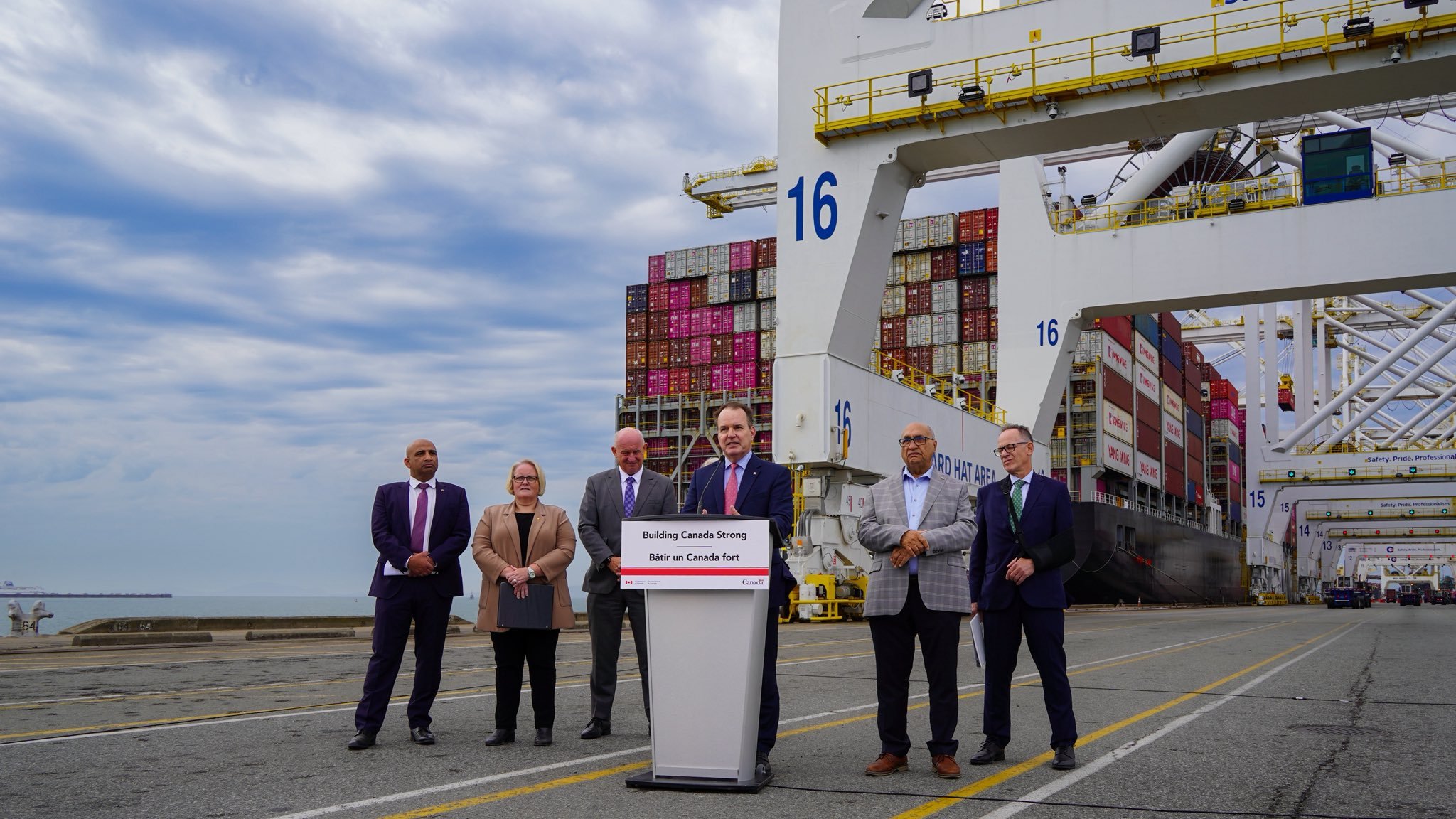
Referring the Port of Vancouver Gateway Strategy to the Major Projects Office ‘will advance critical infrastructure that will strengthen our trade corridors, modernize our transportation network, and help Canadian businesses reach new markets,’ says Transport Minister Steven MacKinnon. / TWITTER PHOTO
A plan to increase opportunities for Canadian exporters came into focus as the federal government moved ahead with billions of dollars in promises to upgrade merchandise and oil terminals in Vancouver.
Under the so-called Port of Vancouver Gateway Strategy, Transport Minister Steven MacKinnon said four projects intended to bring about a major upgrade in export capacity will be referred to Ottawa’s Major Projects Office for possible fast-tracked approval as projects of national interest.
“The Port of Vancouver truly is Canada's port, but aging infrastructure, rail bottlenecks and limited industrial land are constraining future growth. To compete in a changing global economy, we need to invest now,” MacKinnon told media at a press conference in Delta, B.C. “To support that growth, we need to ensure a new and broader approach for environmental protections that encompass the region versus project by project, and support the future growth of Canada's largest marine trading corridor. That's why I'm pleased to announce the referral of the Port of Vancouver Gateway Strategy, or the Gateway Strategy, to the Major Projects Office.”
Highlighting the plan announced Thursday is the proposed expansion of Vancouver’s Roberts Bank Terminal 2. The overhaul would include a three-berth terminal intended to increase the port’s container capacity by 50 per cent as well as providing a port for the proposed West Coast oil pipeline from Alberta to the B.C. coast.
McKinnon said the new container terminal would enable $100 billion in new trade capacity annually, potentially contributing $3 billion to Canada’s GDP each year.
In a separate process, the Vancouver Fraser Port Authority will on July 20 begin a process to select an operator for a major terminal at a 40-acre site in Richmond, B.C.
In a third initiative under the Gateway Strategy, Transport Canada and the railways are developing rail infrastructure improvements to increase capacity and enhance supply chain efficiency and reliability at the port of Vancouver.
Moving more of what Canadians make
The fourth focus under the Gateway plan balances port expansion with related matters, including measures to protect whales and salmon and enhance marine safety.
“As Canada’s largest port, we know we’re going to play an outsized role in delivering on Prime Minister Carney’s commitment to double exports to markets outside of North America,” Peter Xotta, President and CEO, Vancouver Fraser Port Authority, said in a statement. “Today’s announcement will help the Port of Vancouver and our partners get game-changing projects like Roberts Bank Terminal 2 built, and move more of what Canadians make, mine, harvest and grow to more customers around the world.”
The fast-tracked proposal for the port of Vancouver follows from the multibillion-dollar Canada-British Columbia Cooperative Prosperity Agreement signed by Carney and B.C. Premier David Eby on July 2. As well as promised support for upgrading Vancouver’s port, it included funding for forestry, mining and renovating the Massey Tunnel in B.C.'s Lower Mainland.
During questions from reporters, MacKinnon was asked how the government could justify a project that had been subject to criticism by environmentalists. He replied that the proposal had undergone years of review, incorporating scientific expertise, traditional knowledge and First Nations concerns. He said the process had produced the strongest possible environmental conditions and mitigation measures, while balancing infrastructure needs with environmental protection.
Can’t review forever
“Nowhere else on the planet do we take as much care and spend as much time considering how to balance economic activity and infrastructure with the incredible natural environment,” he said, adding that the review could not continue indefinitely. “We have spent many, many years getting to this point, and it is time to make a decision.”
The minister was also asked whether expanded port security would accompany the project, in light of concerns around illegal guns, drugs and other contraband. MacKinnon replied that security is a separate issue, but he acknowledged that threats are evolving. He said the federal government remains in regular discussions about port security and that the RCMP works with provincial, municipal and federal partners.
“I am in constant dialogue with my colleagues in the government about port security issues,” he said. “We have one of the world’s best police forces. They’re in charge of port security.” He did not announce any new police force, funding or security measures, saying only that the government would “keep working on the challenge.”
Asked about the distinction between potentially listing the project under the Building Canada Act and referring the broader strategy to the Major Projects Office, MacKinnon said the possible listing remains subject to a time-limited consultation process with affected First Nations. “The potential listing is subject to ongoing conversations and consultations with our First Nations partners,” he said.
Separately, he said the Major Projects Office has been asked to define the scope of a broader gateway strategy covering interconnected infrastructure needs, including rail bottlenecks, modernized port facilities and increased export capacity for prairie producers and mining companies. He compared the approach to the referral of Alto high-speed rail as a national strategy, saying the gateway initiative is equivalent in terms of importance and would follow a similar process.