Carney reaches game-changing deal with China on EVs that will help Canadian farmers
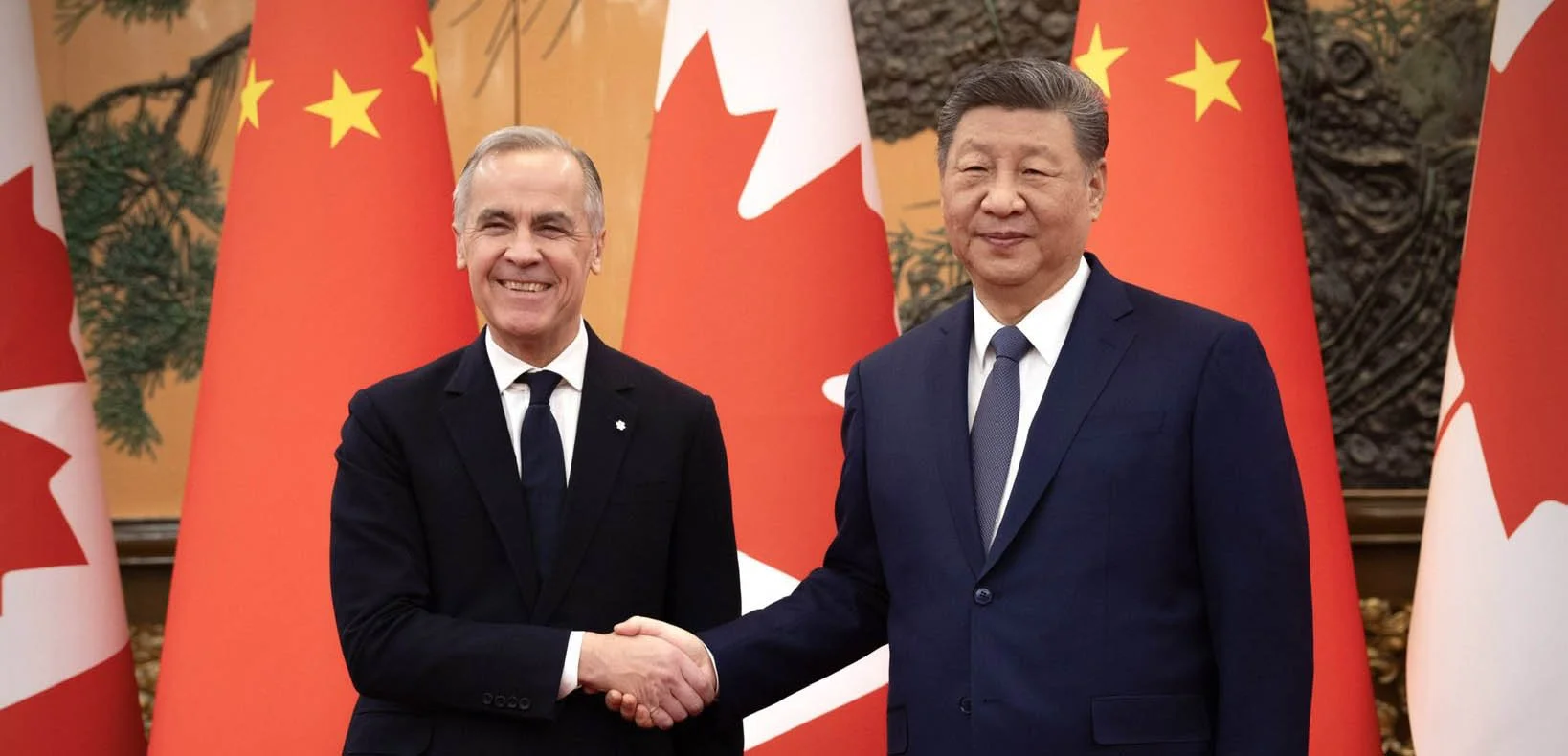
‘Canada and China are forging a new strategic partnership. We’re leveraging our strengths — focusing on trade, energy, agriculture, seafood, and other areas where we can make massive gains for both our peoples,’ Prime Minister Mark Carney, pictured with China President Xi Jinping. / TWITTER PHOTO
Canada’s trade deals with China during Prime Minister Mark Carney’s recent trip promise modest, near-term gains for the Canadian economy, especially in agriculture and seafood, with potential longer-term Chinese investment, but significant implementation risks remain, says Scotiabank Vice President and Head of Capital Markets Economics Derek Holt.
“Canada’s delegation of cabinet members, provincial premiers and business lobbyists went to China to reset the approach of the past 10+ years that subjugated bilateral commerce to virtue-signalling and often hypocritical finger wagging. Commerce is in charge now,” he said.
“The deals will offer immediate, modest, and concentrated economic benefits to Canada. Most of the nearly immediate benefits will flow through to the agricultural and seafood sectors. Medium- and long-term benefits could include investment by China in sectors like autos, energy and clean tech—and the jobs that go along with that. To be sure, there are risks aplenty. One is implementation risk on the long road ahead to which we can only say time will tell.”
Carney reached a deal with China on electric vehicle (EV) imports that is expected to bring relief to Canadian farmers suffering from tit-for-tat tariffs.
Realistic, interest-based partnership
The agreement, part of the federal government’s effort to diversify Canada’s trade relations, was described by the prime minister as “preliminary but landmark” and part of a broader strategic partnership with China. It was announced shortly after the prime minister met with President Xi Jinping,
“It’s a partnership that reflects the world as it is today, with an engagement that is realistic, respectful and interest-based,” Carney said at a news conference in Beijing.
Canadian canola meal, lobsters, crabs and peas will no longer be subject to Chinese “anti-discrimination” tariffs from March to at least the end of the year. There was no mention of canola oil, which is subject to a 100% tariff.
In return, up to 49,000 Chinese electric vehicles will be allowed into the Canadian market each year at a 6.1% tariff instead of the current 100 per cent tariff.
By 2030, half of those imported vehicles will cost less than $35,000, which Carney said will ensure EVs are more affordable for Canadian consumers.
He added the 49,000 vehicles represent approximately the number imported from China in 2023, before the tariffs, and is less than 3% of the Canadian domestic auto market.
While welcomed by agricultural and seafood producers and Saskatchewan Premier Scott Moe, the deal put the Team Canada response to U.S. tariffs in jeopardy, with manufacturers and Ontario Premier Doug Ford questioning the wisdom of giving China wider access to the Canadian market.
“China now has a foothold in the Canadian market and will use it to their full advantage at the expense of Canadian workers,“ Ford said in a statement.
U.S. responds
The agreement with Beijing also risks exacerbating trade issues with U.S. President Donald Trump just as Canada enters into key trade negotiations with Washington over the future of the Canada-U.S.-Mexico free-trade deal. Canada’s tariffs on EVs were in keeping with similar import taxes in the U.S.
The deal with Xi was part of Carney’s effort during a visit to Beijing to begin upgrading the potential of Canada-China economic relations after years of fierce bilateral tensions.
In response, Trump said it was appropriate for Prime Minister Carney to strike a trade agreement with China, adding that “if you can get a deal with China, you should do that.” Separately, U.S. Trade Representative Jamieson Greer criticized Canada’s decision to allow up to 49,000 Chinese electric vehicles at low tariffs as “problematic,” warning it could undermine auto protections and raise cybersecurity concerns.
“It’s problematic for Canada,” Greer told CNBC on Friday. “There’s a reason why we don’t sell a lot of Chinese cars in the United States. It’s because we have tariffs to protect American auto workers and Americans from those vehicles.”
Greer said Canada was seeking agriculture tariff relief as part of the EV agreement. “In the long run, they’re not going to like having made that deal.”
Despite how the U.S. will react, Holt said, “Canada has no choice but to broaden its relations as the U.S. retreats from its trusted economic partners in an increasingly protectionist and isolationist fashion. China’s long-run growth potential cannot be ignored to satisfy an isolationist U.S. regime.”
He added: “If a main goal of U.S. isolationism was to thwart China’s ambitions, then it’s failing. Economic necessity is the main driver as the U.S. mistreats and abuses its Canadian relationship.”
Canada is entering a “new era of relations” with China, opening the possibility of the two countries becoming “strategic partners, Carney told his hosts.
“We’re heartened by the leadership of President Xi Jinping and the speed with which our relationship has progressed,” Carney told China’s top legislator, Zhao Leji, who is also among the top leadership in Beijing’s ruling Communist Party.
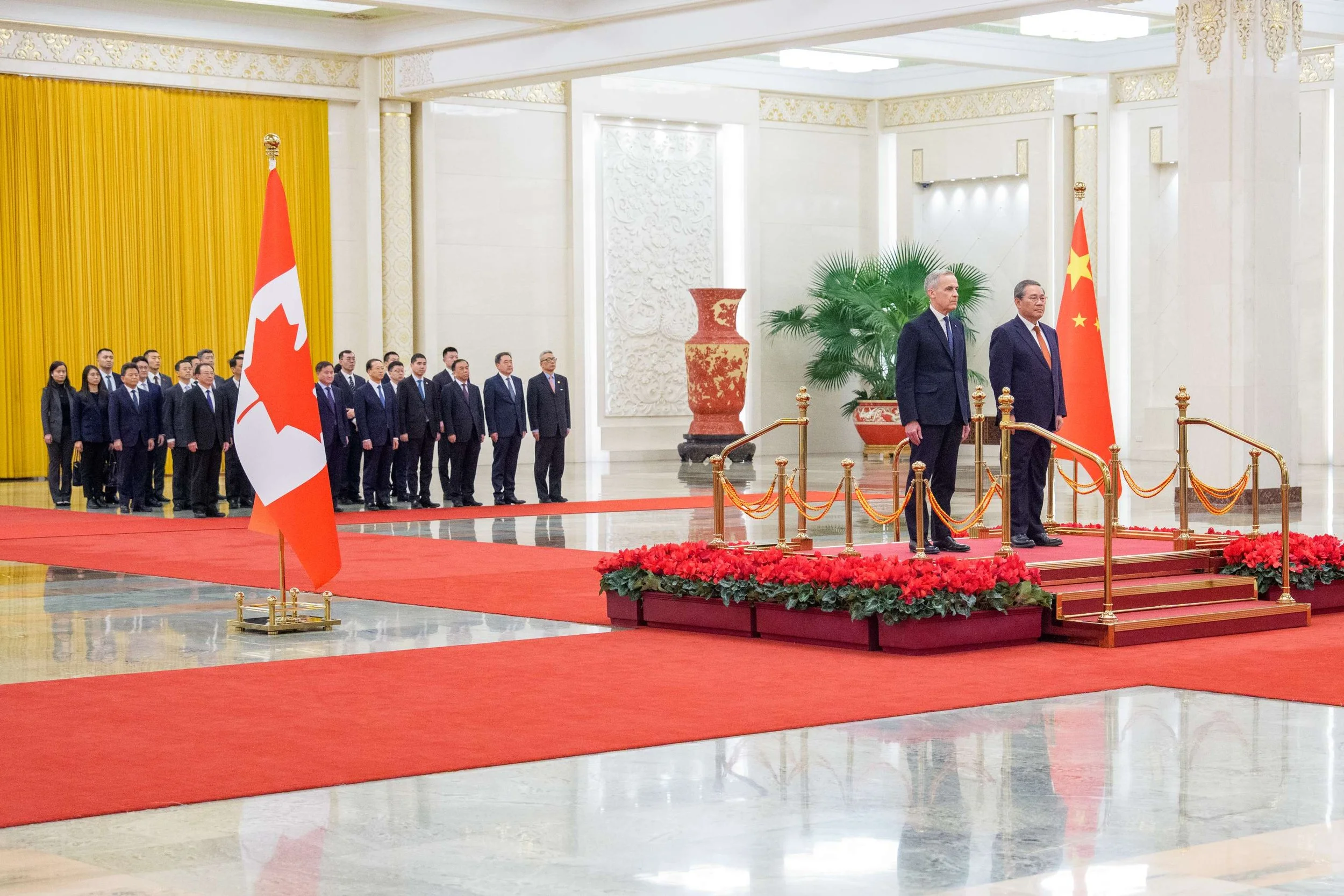
The prime minister made the comments as he was welcomed in Beijing by the second and third most powerful figures in China’s political system: Premier Li Qiang and Zhao Leji, chairman of the standing committee of the National People's Congress.
Trade turnaround
Carney added Ottawa hopes this renewal will become an "example to the world of co-operation amidst a time globally of division and disorder."
Premier Li lauded what he called a “turnaround” in bilateral ties with Canada, saying it was a “new starting point” for the two countries.
Carney, who is taking a more pragmatic view of Canada’s trade and diplomatic relations as a result of new tensions with Washington, was conducting the first official visit by a prime minister to Beijing in nearly a decade, marked by deteriorating diplomatic relations between the two nations.
The MOU on energy cited energy security and the transition to low-carbon energy systems as goals, but said petroleum will still be important in the meantime.
Signed by Energy and Natural Resources Minister Tim Hodgson for Canada, the MOU said both countries “recognize that conventional energy continues to play an important role in the energy transition” and agree to “strengthen exchanges in areas such as oil and gas resources development, including crude oil, liquefied natural gas and liquefied petroleum gas trade.”
The agreement said both countries acknowledge Canada as an “important potential partner in responsibly produced and reliable global oil, LNG, and LPG supply and will explore opportunities for mutually beneficial co-operation based on market principles.” (LPG refers to liquefied petroleum gas.)
The MOU also mentions Canadian uranium sales to China, saying the two countries aim to “strengthen co-operation in natural uranium trade.”
Holt said the announcements are a starting point with “careful” language “to emphasize further opportunities while raising just as many questions as those that were answered.” However, he said that it should be noted “the deal pledges that China will make joint-venture auto investments in Canada within three years. It will be important to monitor how much of an investment and how many jobs we’re talking about particularly in light of opposition to the tariff reduction by the Ontario government. Jobs, investment, more choice, cheaper and with cleaner emissions — what’s not to like? Trump’s preference toward gas guzzlers is against the way the world is going.”