Carney leaves ‘boring’ pipelines aside to focus, for the moment, on projects coveted by B.C.

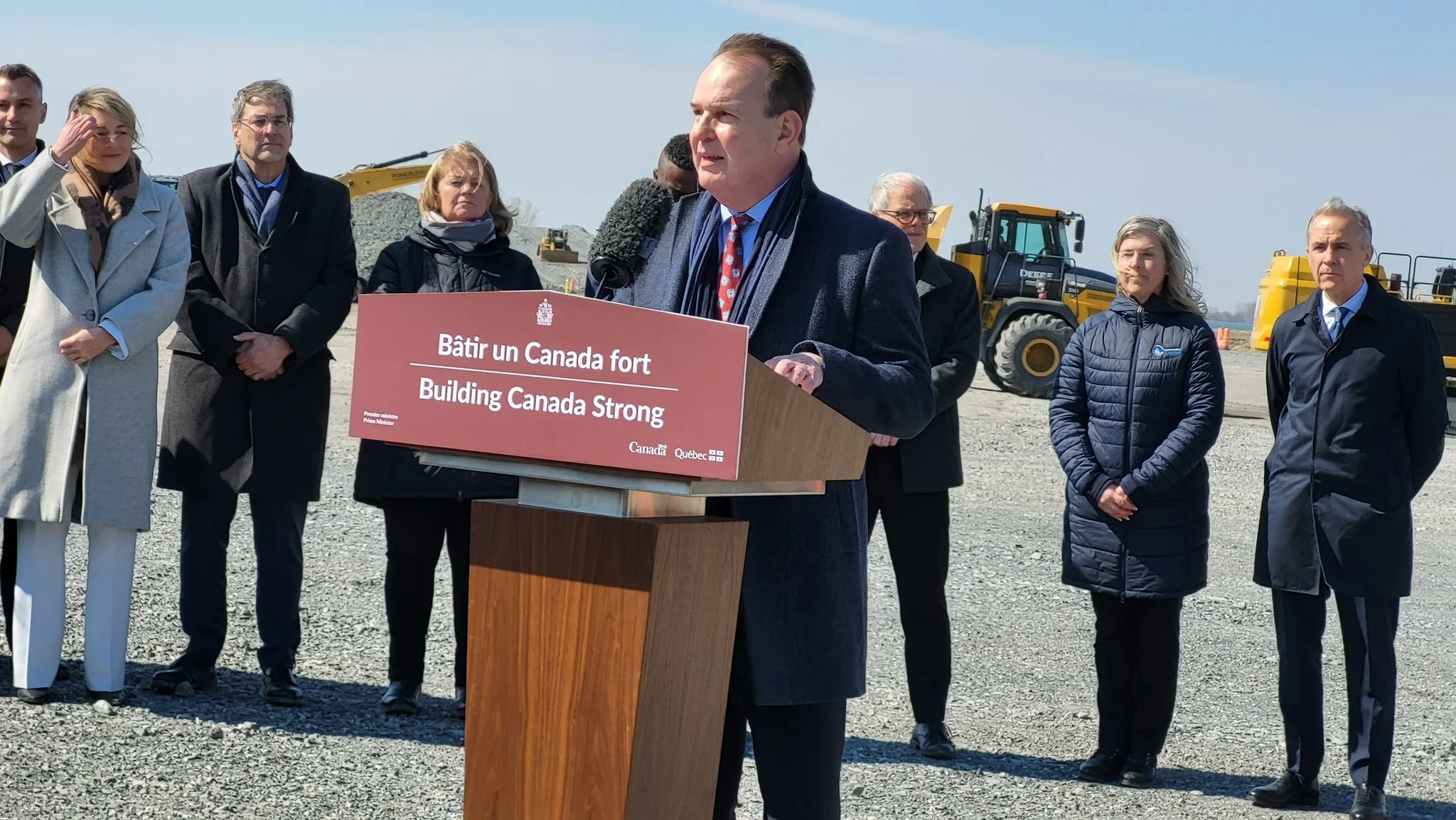
‘When we build major projects sustainably, we’re investing in a clean energy future — one that will support Canadian workers and businesses for generations to come,’ says Prime Minister Mark Carney. / TWITTER PHOTO
Pipelines are “so boring,” Mark Carney told a business audience in Toronto last week.
And, indeed, when the prime minister released his second list of recommended building projects, no oil pipelines made the cut.
The mega-projects singled out by Carney for possible “national interest” designation by the Major Projects Office would all help fulfill his ideas about Canada’s future. Namely, the creation of a greener, non-U.S.-dependent economy bulked up by more energy and critical minerals production and increased export potential.
“With the world changing rapidly, Canada must change our economic strategy dramatically,” the prime minister said when announcing the latest preferred proposals. “We are doing that by drawing on our legacy as builders. . .”
The proposed Ksi Lisims LNG plant on Pearse Island in northwestern B.C. that was mentioned Thursday epitomizes Carney’s vision of future development. It is led by the Nisga’a Nation and will become Canada’s second-largest LNG facility with the capacity to export 12 million tonnes of LNG per year to new markets in Asia.
Not-so-messy LNG
It is also supposed to be one of the world’s cleanest LNG operations — with emissions 94% below the global average — with the potential to add $4 billion a year to GDP. Plus, the 750-km B.C. pipeline to supply the Ksi Lisims LNG operation would of course carry natural gas, which may not draw as much opposition regarding possible leaks as do more potentially damaging oil sands pipelines.
Also linked to Ksi Lisims — this time as a source of electricity — is B.C. Hydro’s North Coast Transmission Line (NCTL) project, which was also recommended by Ottawa Thursday. It reflects the same thinking as set out in Ottawa’s expressed interest in September in Wind West Atlantic Energy, a proposed project to harness wind power for Atlantic Canada.
“Core to becoming an energy superpower will be fully capitalising on Canada’s advantage in clean energy by substantially expanding our 80% clean electricity grid,” Carney said Thursday. “Because clean electrification is the path — the only path — to building a sustainable, prosperous economy.”
He said that by 2050, Canada’s electricity needs could triple because of economic growth and rising demand for clean transportation, green industrial processes, and data centres: “To meet this demand, we will need greater hydroelectric, solar, wind, and nuclear capacity. And we will need new interconnections between provincial systems to build an energy network that is efficient, resilient, and sustainable across Canada.” Accomplishing this can unlock enormous economic opportunities, Carney added.
The government this week also prioritized critical mineral development, which it sees as a major export advantage, a key element in this country’s modern manufacturing capacity and a means of offsetting China’s dominance in these materials.
Some of the mega-projects recommended by the prime minister are fairly far along in the approval process. Getting the other proposals designated of “national interest” by the MPO, financed and approved in the face of what in some cases is likely to be intense opposition from environmentalists and First Nations is, however, another story entirely.
Be that as it may, Carney’s promotion of these projects is a direct follow-up to last week’s federal budget, with its multi-billion-dollar focus on breaking down barriers to investment and mobilizing private capital to ignite an economic boom. Alluding to the budget on Thursday, Carney said “we are taking our future into our own hands by building one Canadian economy, powered by new infrastructure — connecting our regions, diversifying our markets, bringing housing back to affordable levels, and protecting our communities.”
‘Grand Bargain’ door ajar
At the same time, Carney has left the door ajar for the possible development of an oil sands pipeline. He said Alberta Premier Danielle Smith, who badly wants permission to construct an oil sands conduit from her province to a northern B.C. port, can expect to hear something from Ottawa in coming weeks.
The federal government is involved in a complex, interlocking series of discussions with Alberta about the province’s stance on industrial carbon pricing, federal environmental regulations and what Smith has called a “grand bargain” that would balance more oil sands production with emissions reductions. That arrangement relies on development of the Pathways project, a $16-billion carbon-capture-and-storage pipeline proposed by oil sands producers. The companies, which have so far not committed to the needed funding for the project, are in discussion with federal and Alberta officials about how to pay for it.
Carney has said enabling the Pathways project would be crucial to any decision by Ottawa to greenlight Smith’s coveted pipeline to B.C.’s west coast. Even so, it would also require a decision by Carney to modify the previous Liberal government’s popular ban on oil tankers in northern B.C. waters. And it would encounter fierce resistance from the vigorous B.C. green movement and Indigenous groups, as well as from B.C. Premier David Eby’s government. With all that in mind, one might be forgiven for wondering if all the attention paid to B.C.’s economic aspirations in Thursday’s announcement of preferred infrastructure proposals might be designed to, well, make it a bit harder for Eby to say no to somebody else’s preferred mega-project.