BoC should be less worried about housing and focus on productivity instead: Scotiabank’s Derek Holt
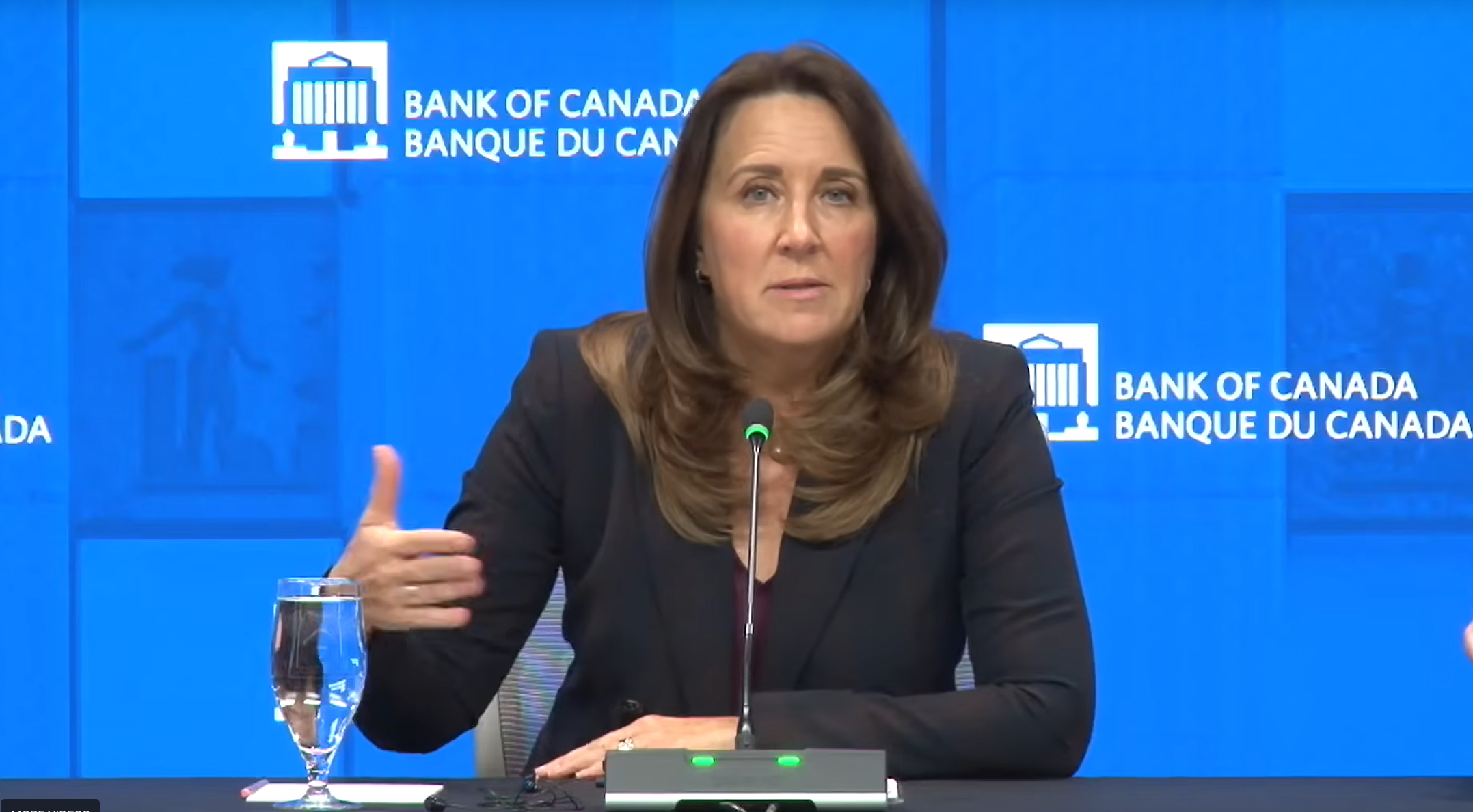
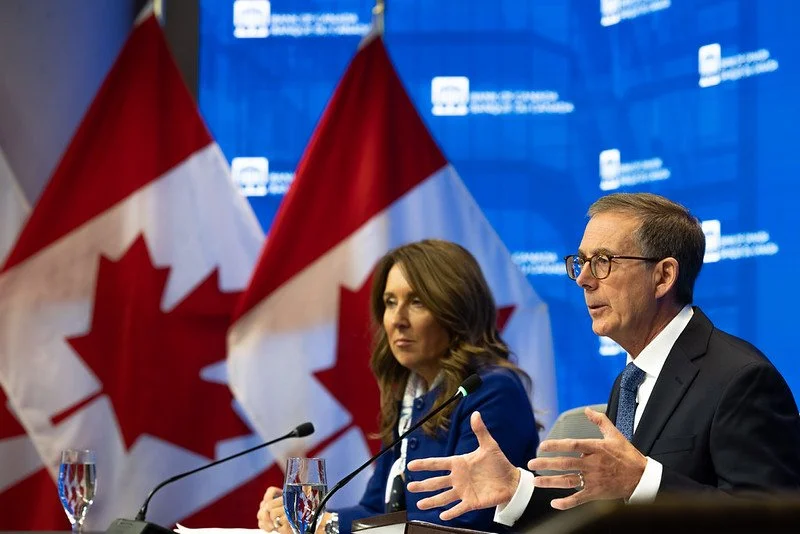
Deputy Governor of the Bank of Canada Carolyn Rogers, pictured on March 18, when the Bank announced it would keep its interest rate at 2.25%. / SCREENSHOT
Policymakers should prioritize boosting productivity and incomes rather than trying to push home prices lower, says Derek Holt, head of capital markets economics at Scotiabank, as the Bank of Canada held its benchmark interest rate steady amid growing economic uncertainty.
“Policymakers should be laser-focused upon getting incomes higher by improving growth compared to ten wasted years,” Holt wrote in an analysis after the central bank’s latest decision to keep the policy rate unchanged at 2.25%.
Holt was responding to Deputy Governor Carolyn Rogers' comments that housing prices needed to come down if we are to address affordability issues. In response to a question about average home prices falling over a five-year span for the first time in 27 years, Rogers said during a press conference: "The housing market is looking weaker and weaker than we had incorporated in our January outlook. That's something we'll be looking at in our April outlook. Some of the more recent data coming out of March looks like we might see a rebound but it's too early to tell."
She added: "We need house prices to come down so that housing is more affordable. We've all been worried about how fast prices went up in recent years and now we're worried about how they're coming down. We do need them to settle down a bit for housing to get more affordable. There isn't really a path to affordability particularly in some of our big centres without housing prices correcting, so we will watch that. Housing is one of the things that feeds into our forecast and deliberations on monetary policy."
Bias toward lower home prices would be dangerous ground
Holt said it was dangerous for the Bank of Canada to be saying this.
"You mean to say that the BoC has an explicit bias toward getting house prices lower? That’s dangerous ground. Does that mean the BoC would set a high bar against easing if needed going forward because they wouldn’t want house prices to rise?”
Holt said courting lower house prices is risky because if people expect house prices to fall, they may hold off on purchases, causing prices to keep falling, “and perhaps more rapidly so."
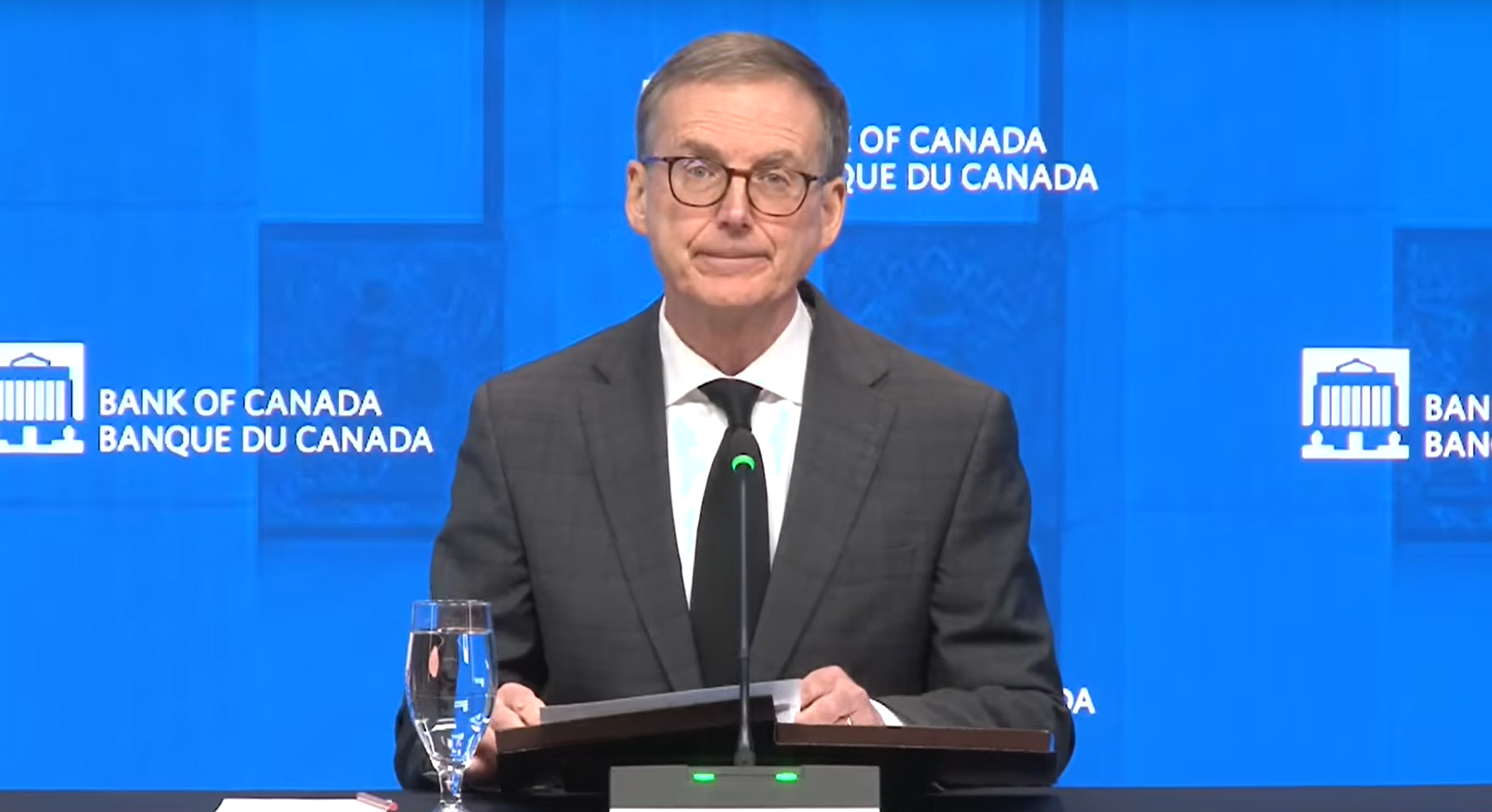
The Bank of Canada has kept its rate steady since October, but Governor Tiff Macklem struck a cautious tone, emphasizing increasing risks tied to global conflict and trade uncertainty.
"Canada’s economy is dealing with a lot, and now we face more volatility. The Bank of Canada’s role is to be a source of stability. We’re supporting economic activity while ensuring that a jump in energy prices doesn’t turn into persistent inflation," he said in his opening remarks.
War in Iran adds new layer of uncertainty
The war in Iran has added a new layer of uncertainty, Macklem said, and its impact will depend on “how long the conflict lasts and the extent to which it spreads across the Middle East.”
"It is too early to assess the impact of the war on growth in Canada,” he said. “If higher oil prices are maintained, this will boost income from energy exports. At the same time, higher oil prices squeeze consumers, leaving them with less income for other spending.”
The Governor listed some of the other effects the war is having on households and businesses: “Financial conditions have already tightened: global bond yields are higher, stock markets are lower, and credit spreads are wider. Transportation bottlenecks caused by the effective closure of the Strait of Hormuz could also impact supplies of other commodities, such as fertilizer."
He warned that while inflation has been near the Bank’s 2% target for over a year, rising oil prices are set to push it higher in the near term.
At the same time, the broader economy remains weak. Macklem pointed to a 0.6% contraction in fourth-quarter GDP, a soft labour market with unemployment rising to 6.7% in February, and ongoing volatility in trade.
“The Canadian economy remains in excess supply and is growing slowly as it adjusts to U.S. tariffs and uncertainty,” he said.
Canada’s economy is dealing with a lot
"Economic weakness combined with rising inflation is a dilemma for central banks. Raising interest rates to slow inflation could further weaken the economy. Easing interest rates to support growth risks pushing inflation well above target. Canada’s outlook is further complicated by structural change — shifting trade relationships, the adoption of AI and changes in demographics."
Meanwhile, Canada’s inflation rate slowed to 1.8% in February from 2.3% in January, largely due to significant drops in gasoline and natural gas prices. Statistics Canada noted that lower costs across several sectors, along with last year’s price increases tied to the end of a federal tax holiday, contributed to the slowdown.
BMO chief economist Doug Porter said the inflation data felt "stale" given gas prices have surged more than 15% since the U.S.-Iran war started. "It clearly shows that underlying inflation was decelerating notably in early 2026. With most measures of core inflation close to the Bank's 2% target, policymakers can more readily 'look through' the oil-driven spike that is surely coming to headline inflation in the next few months. And that is particularly the case with employment weakening even before the war, and the uncertain fate of the USMCA still looming."
Holt noted that the CUSMA review and ongoing trade negotiations will be important. “More important is the outlook for the U.S. economy,” he wrote. “With just under 90% of Canadian exports to the U.S. being CUSMA compliant and a depreciated CAD from past years, trade competitiveness for most exporters has improved and has been benefiting from an income pull-effect from the U.S. economy. If the U.S. economy goes down amid mounting risks, then we've got bigger problems than trade negotiations.”