A GlobalEye on the prize: Retooling our procurement system for a new, faster era
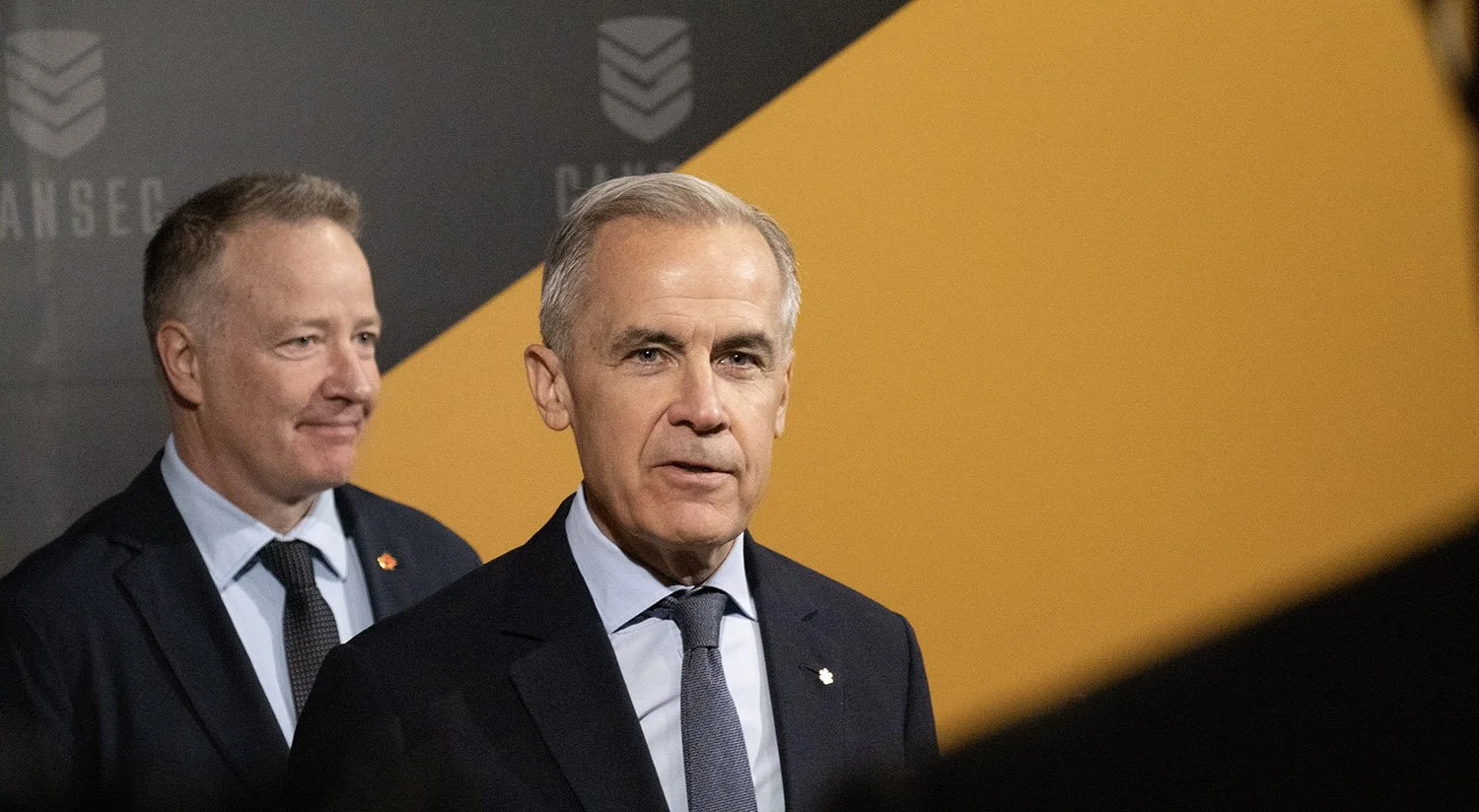
‘We used to build in this country,’ Prime Minister Mark Carney, pictured with Secretary of State for Defence Procurement, said at CANSEC. ‘We are building again.’ / MEANS & WAYS PHOTO
Canada's procurement system is not moving fast enough and the consequences for national security are real, say tech and defence industry leaders.
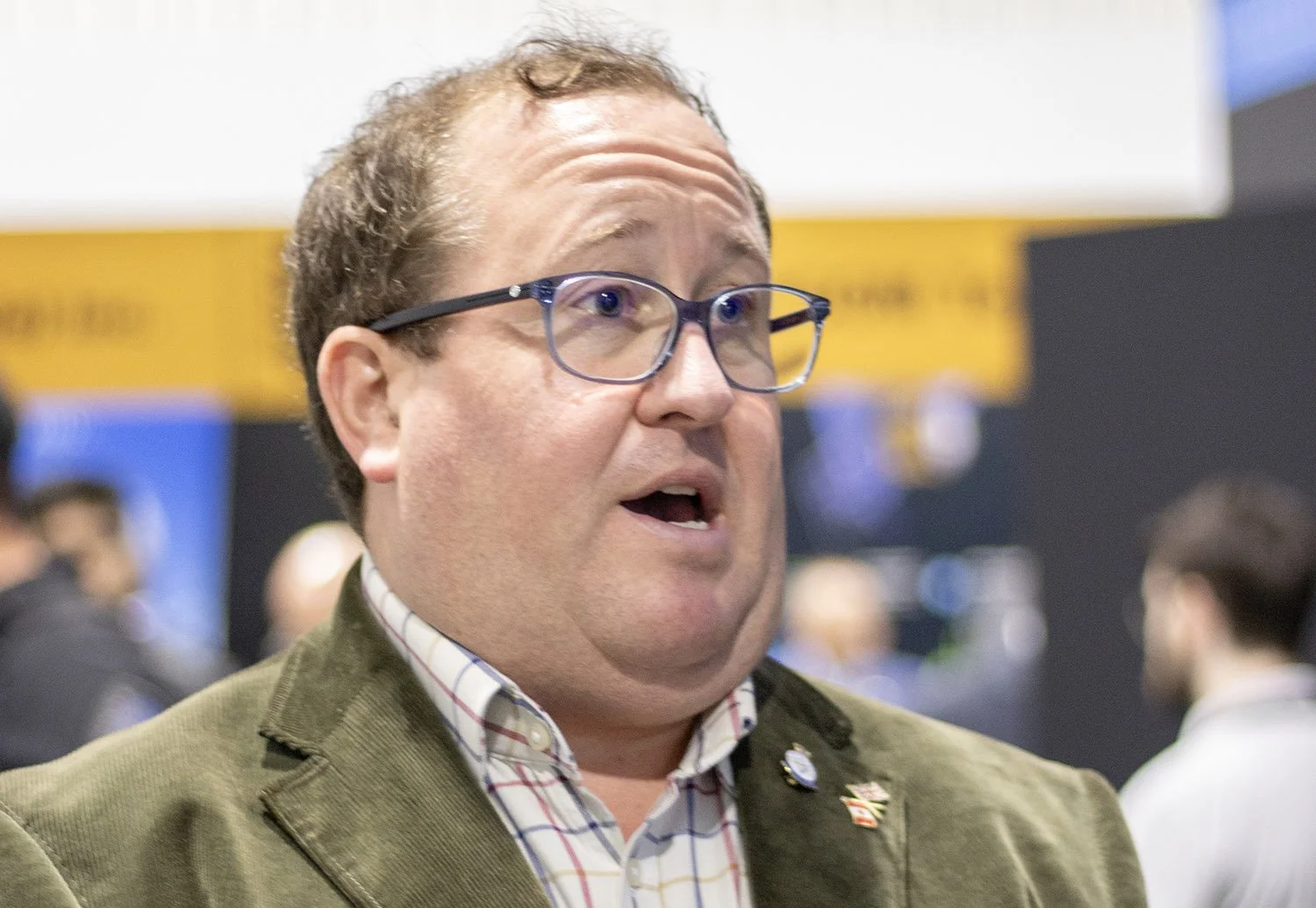
For Jason Barton, Public Sector Leader, Defence and Public Safety, Red Hat Canada, the problem runs deeper than bureaucratic delay. “No longer is it just about munitions, ships, planes,” he told Means & Ways during CANSEC, a defence, security & emerging technology conference. “It's now also very tightly tied to software-defined capabilities.”
Barton said the mismatch is structural. “The framework of the procurements themselves don't necessarily align very well, especially because there's this overarching shortage of skillsets within DND and CAF to actually have operational capacity,” he said, adding that there needs to be a shift away from large, slow, monolithic contracts.
“The shape of the actual procurement methodology doesn't align well with a lot of the modern and more agile and modular type approaches. We need to get those small wins, rather than aiming for very large big-bang procurements.”
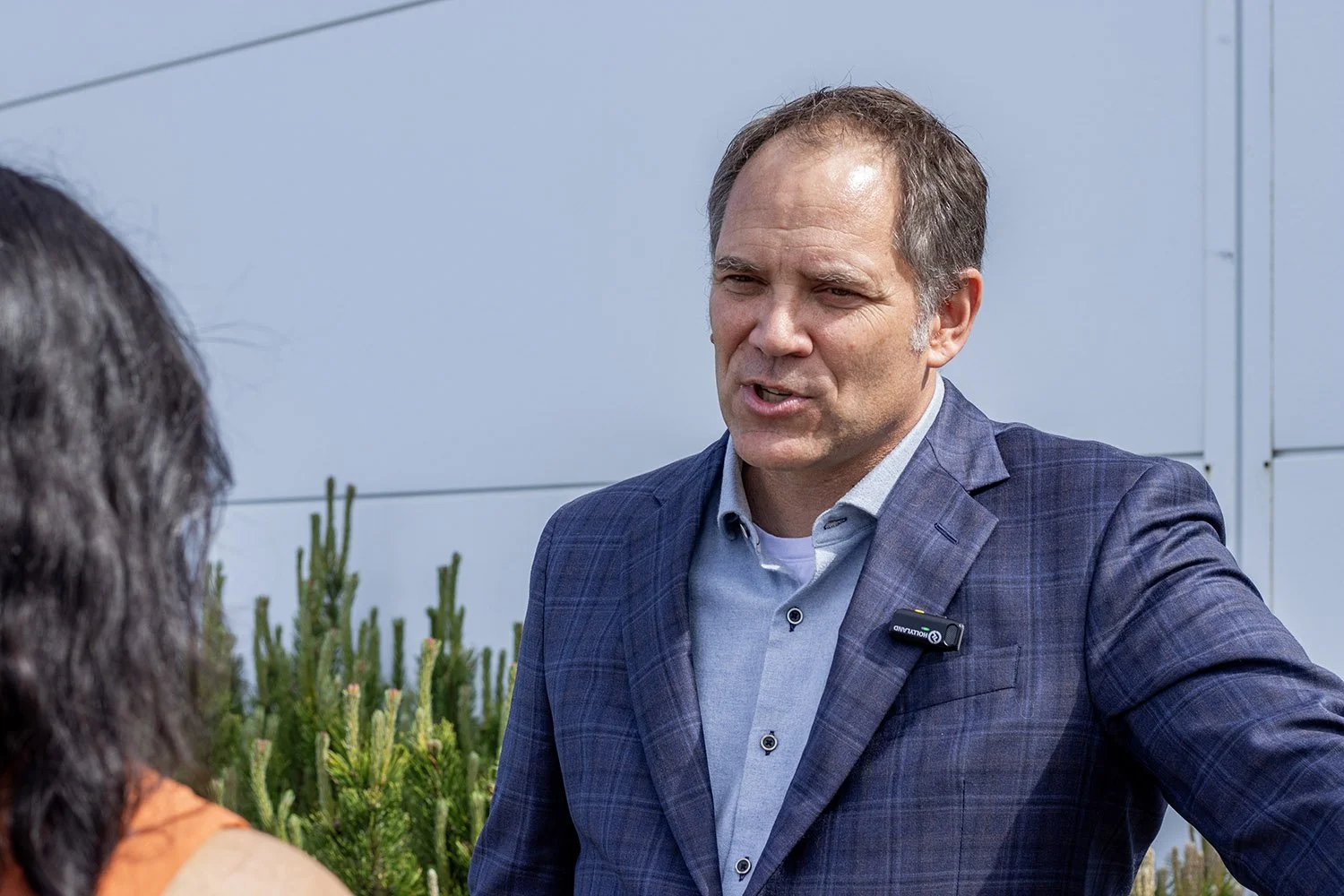
When asked what the biggest challenge the federal government is having right now in defence and tech procurement, Nelio Di Cola, CGI Director Consulting Services, Defence and Public Safety, said speed.
Can’t keep up
“If you take what's going on in Ukraine and Iran as examples right now, the way innovation is moving is at breakneck speeds, and it's very difficult to keep up, and we don't really have the system right now to keep up with that,” he said during CANSEC, which was hosted by the Canadian Association of Defence and Security Industries.
Samuel Witherspoon, CEO of Ottawa-based Anvil, a data platform that delivers intelligence to support decision-making, described the practical effect on companies trying to respond to procurement calls. “We're talking about capabilities that were defined three to five years ago that are going to be turned online three to five years from now,” he said. “The technology has changed 10, 15, 100 times since the initial capability definition.”
Mark Carney, the first Prime Minister to address the conference, acknowledged the urgency and announced a series of measures intended to transform how Canada buys its defence equipment.
“That is why we have launched important measures to transform our defence procurement system and support large-scale construction that is fast, flexible, and effective,” he said in his speech. “We launched the Defence Investment Agency to streamline procurement into a single centralized process that reduces duplication of approvals and administrative red tape.”
Carney also announced Canada has entered into negotiations to procure Saab's GlobalEye Airborne Early Warning and Control Aircraft — a long-range surveillance platform designed for Arctic monitoring. “GlobalEye's airborne surveillance capability can track objects and signals up to 650 kilometres away, and will send real-time information to the CAF,” he said.
The aircraft is built around the Canadian-made Bombardier Global 6500 platform, and the deal is structured to establish Canadian production capability.
“At least one third of the planned GlobalEye fleet will be produced in Canada over the next 15 years,” Carney said, adding that the partnership would support more than 3,000 jobs in the Canadian aerospace sector.
The Prime Minister framed the announcement as evidence of Canada's new Defence Industrial Strategy in action — a framework built around three pillars: build, partner, buy. The strategy, first announced in February, is designed to direct procurement dollars to Canadian firms where sovereign capability exists, and to establish deeper industrial partnerships where it does not.
Over the next decade, the government plans to invest $180 billion directly in defence procurement and $290 billion in defence and security-related infrastructure, while projecting more than 125,000 new jobs and a 220% increase in Canadian defence sector revenues, Carney said.
‘There is some walk to the talk’
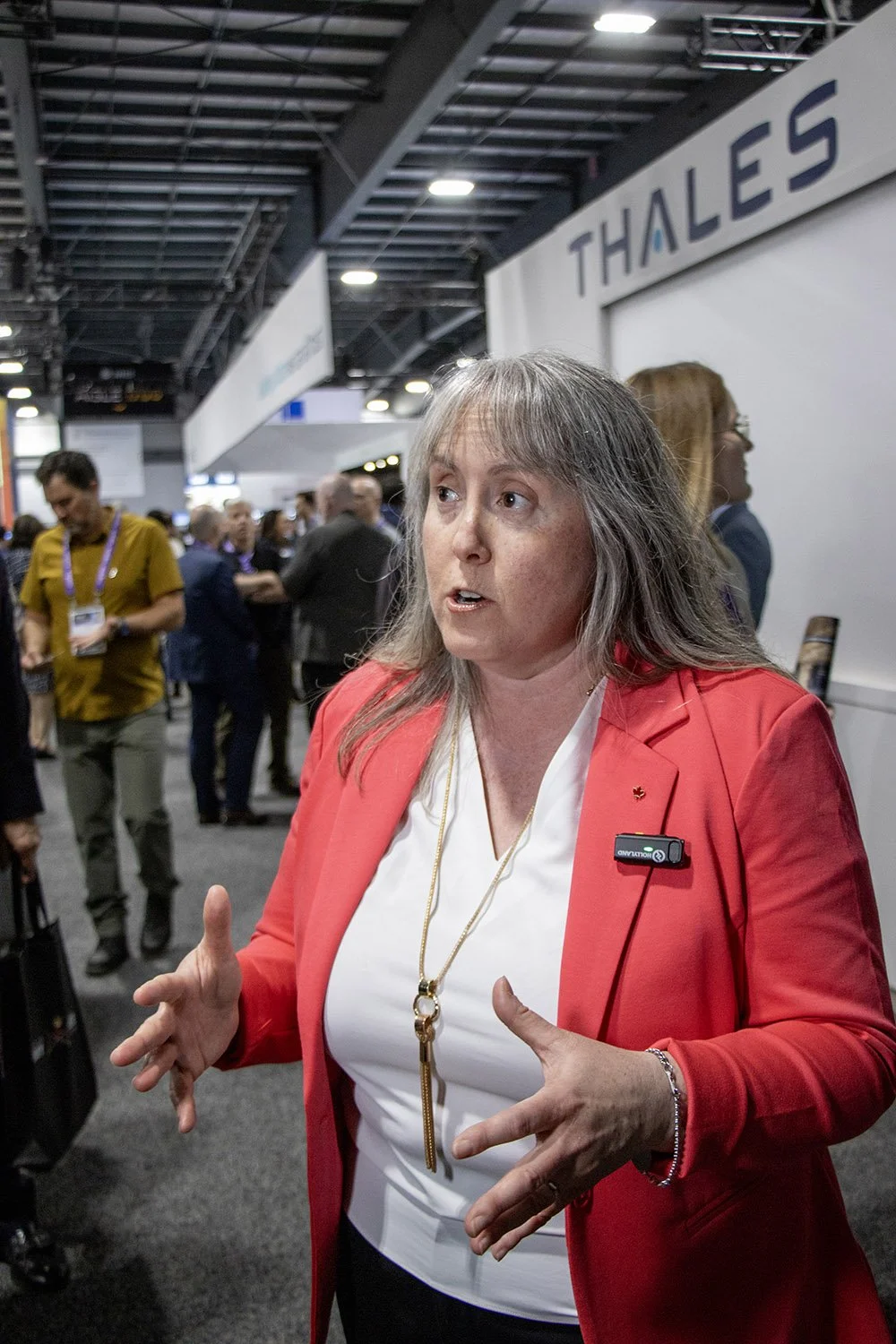
‘We have not seen investment in orders of magnitude anything close to this since the Second World War,’ says Compass Rose Chief Strategy Officer Marci Surkes. / MEANS & WAYS PHOTO
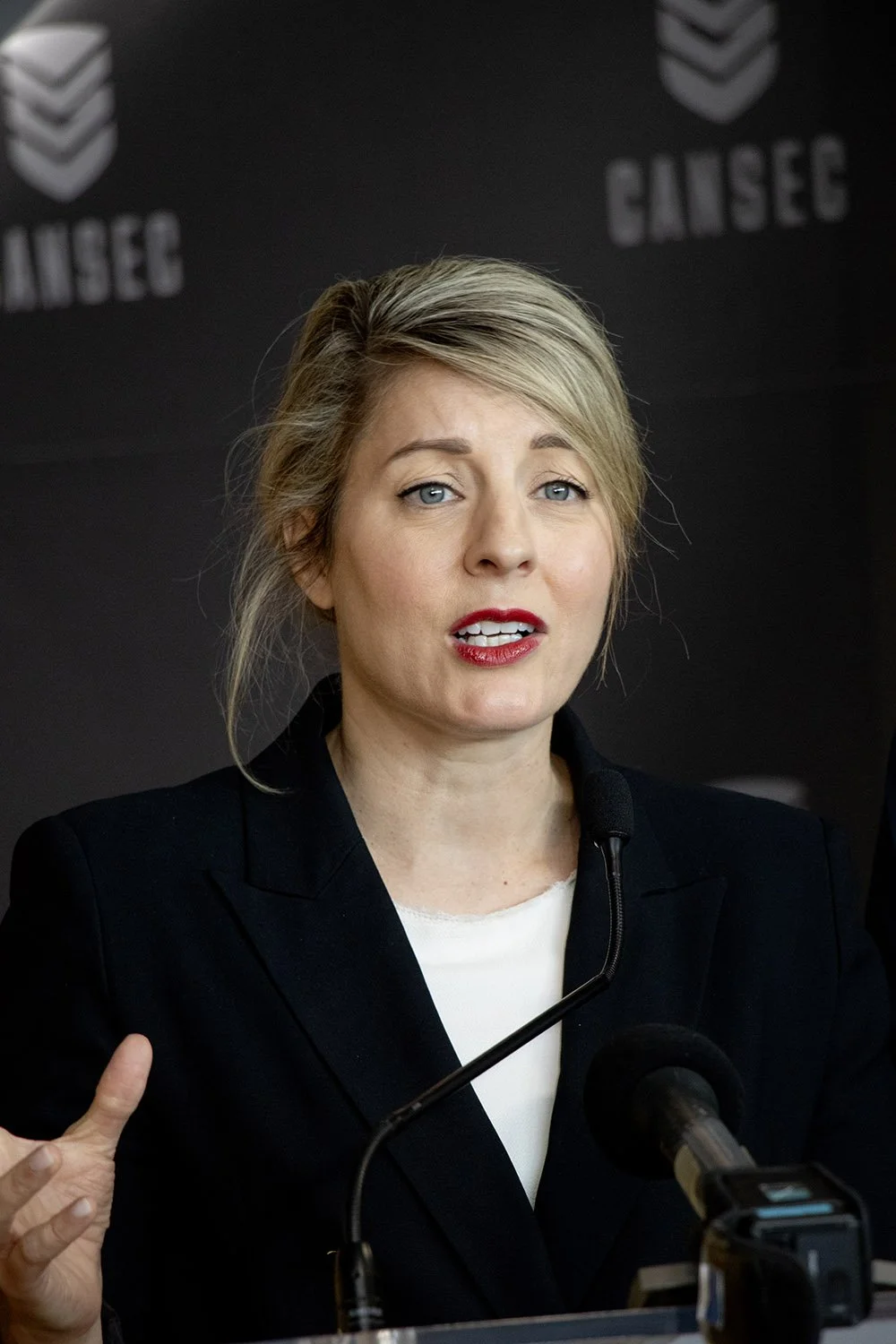
Compass Rose Chief Strategy Officer Marci Surkes, a former executive director of policy and cabinet affairs in the Prime Minister’s Office, said delivery will be the real measure of success. “The circumstances that we find ourselves in geopolitically dictate that we need to act as rapidly as possible,” she said. “The government today has delivered not just ambition, but a real deal. I think this has been a hugely important opportunity for the government to demonstrate that there is some walk to the talk, and that it is time to move.”
She highlighted the submarine procurement as a near-term signal to watch. “The Navy needs those subs yesterday,” Surkes told Means & Ways at CANSEC. “Hearing today from the Prime Minister that they are still on track for a June timeline was actually hugely important.”
Surkes framed the scale of what is underway in historical terms. “We have not seen investment in orders of magnitude anything close to this since the Second World War,” she said.
The Prime Minister struck a similar note in his closing remarks, pointing to Canada's wartime industrial legacy as both precedent and aspiration. “We used to build in this country,” Carney said. “Canada had built one of the largest aircraft and naval fleets by the end of the Second World War. We built one of the world's first autonomous submarines. One of the first drones used by NATO forces. Now, we are building again.”
Beyond procurement timelines, Di Cola pointed to a wider shift in what the defence conversation is actually about. The hardware still matters, he said, but the defining challenge has changed. “For a long time we always talked about the military hardware — the submarines, the fighter jets, the missiles, the ships — and those are all super important, but what excites me now is the conversation really shifting into that interoperability, which is paramount now,” he said.