Macklem: Canada needs a hedge against hedge funds
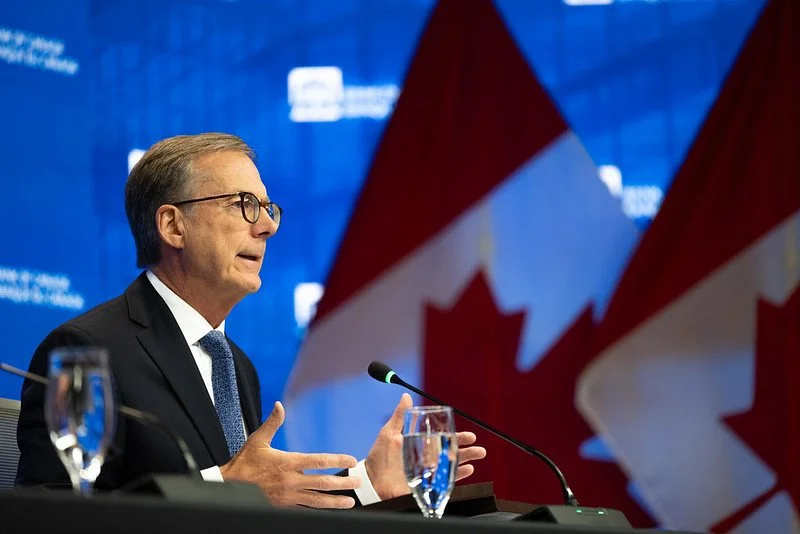
Bank of Canada Governor Tiff Macklem, pictured in September 2025, making a policy rate announcement. / BANK OF CANADA PHOTO
Parts of the financial system outside traditional banks are growing quickly and regulators aren't keeping up, says Bank of Canada Governor Tiff Macklem, warning that hedge funds and private lenders could cause serious issues for the wider economy.
“Riskier activities have migrated to non-bank financial intermediaries,” Macklem said in a speech to the Global Risk Institute in Toronto this week. “This growth in market-based finance has brought clear benefits: diversified risk, improved access to credit and increased efficiency. But risks have not disappeared — they’ve migrated. And our global surveillance and regulatory frameworks haven’t kept pace with the change.
Macklem said regulatory oversight was built for banking, and that non-bank players generally don’t have the same reporting requirements or level of monitoring. “That gap poses a challenge for global standard-setters, national regulators and central banks.”
While the overall global economy is still growing at a healthy pace, the risks are higher than usual, he said, adding tensions between countries, uncertainty over U.S. trade policy and questions about how much AI will really boost the economy are all weighing on the outlook.
One worry Macklem has is how heavily hedge funds are borrowing to buy government bonds. In Canada, they buy up to 50% of Government of Canada bonds sold at auction.
What happens to hedge fund borrowing in times of stress?
“In short, they’ve become central to how sovereign debt markets function, both globally and in Canada,” he said. “In normal times, hedge fund participation makes the market work more efficiently. The issue is what happens in times of stress. Hedge fund purchases of sovereign debt are usually highly leveraged. The funding is largely through repurchase agreements — repo markets — and typically very short-term.”
Macklem pointed to “the dash for cash at the start of the pandemic” and the U.K. bond market crisis in 2022 as examples of how quickly this can spiral.
Private credit is another area of concern, Macklem said. While he noted that “private credit fills real gaps” and “provides financing to companies that may not be well served by traditional banks or public markets,” there is still risk.
“The issue is not private credit itself. It’s how private credit will behave under stress — and the risks it poses to the broader financial system,” he said.
“Regulatory authorities need visibility into leverage, liquidity transformation and underwriting practices. And we need to understand the interconnections between private credit and banks. Surveillance needs to be enhanced so we can monitor how risks evolve as this market grows. That includes tracking cross-border exposures, funding structures and the potential for correlated stress across institutions and jurisdictions.”
Global coordination is also critically needed, he said. “Private credit sits at the intersection of markets and institutions, so we need cooperation across authorities and across borders.”
In the U.S., regulators have ordered that most government bond trades be processed through a central clearing system by June 2027 — which makes the process safer and more stable. Canada is building similar infrastructure through the TMX, and the Bank of Canada plans to use it for its own transactions.
He also called for countries to share more data with each other about where risks are building up. “Risks may be growing faster than our ability to understand and mitigate them,” he said, adding that the private sector needs to be the first line of defence.