Employee ownership trusts ‘one of the most important innovations in business succession policy’: Loffreda
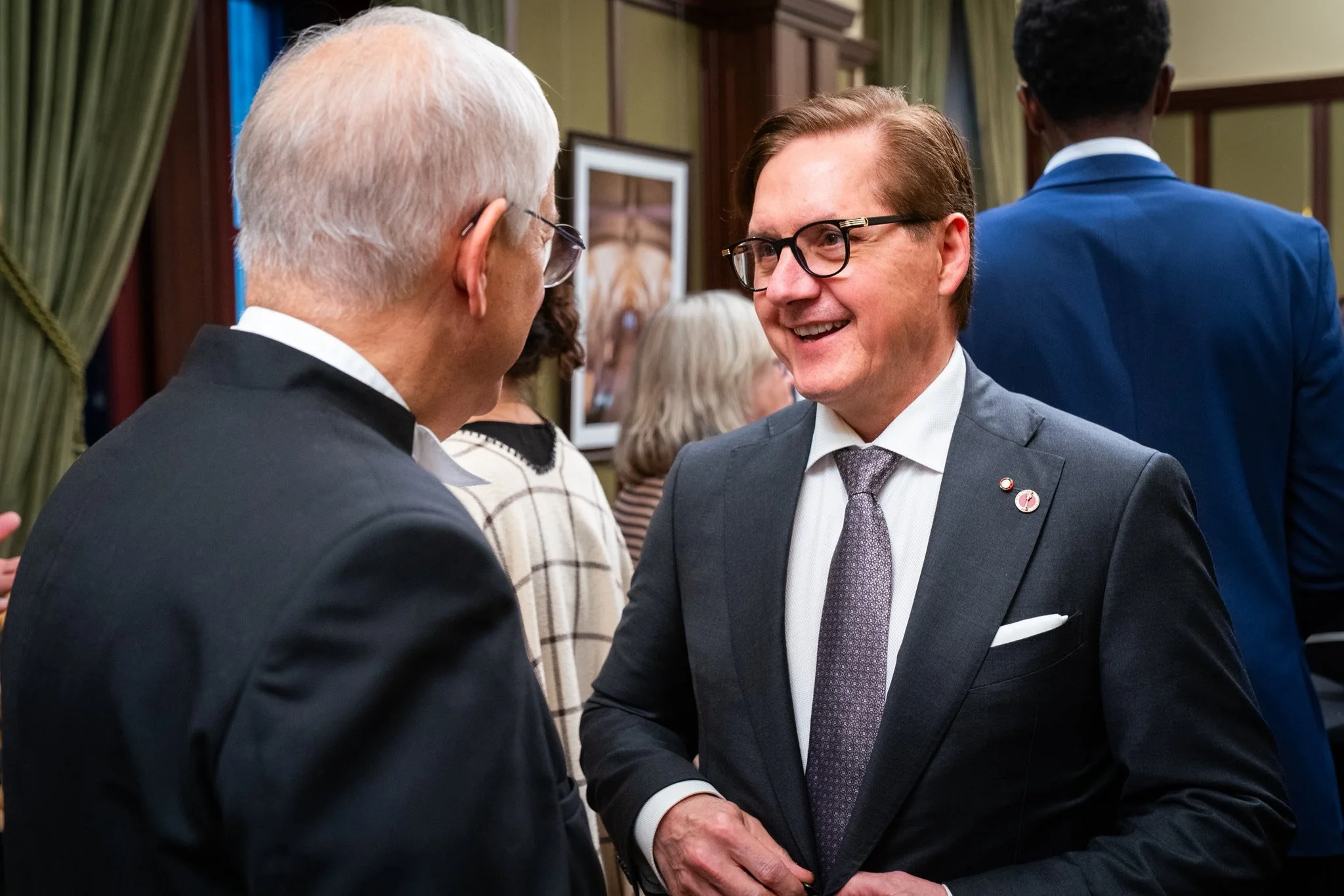
Employee ownership trusts ‘one of the most important innovations in business succession policy in decades,’ says Quebec Senator Tony Loffreda. / FACEBOOK PHOTO
Making a tax exemption tied to employee ownership trusts (EOTs) permanent is a major step for Canada’s economic future that could reshape business succession and strengthen domestic ownership and sovereignty, says Senator Tony Loffreda who has advocated for the move for the last six years.
“I think this represents one of the most important innovations in business succession policy in decades,” Loffreda told Means & Ways. “They [EOTs] provide entrepreneurs with a credible alternative selling to their employees, allowing the employees to share directly in the success they help create. They provide a credible alternative to selling to foreign buyers or large consolidators to keep these businesses in their communities.”
The EOT was introduced in 2023 as a temporary measure that would've ended at the end of 2026. It allowed individuals to receive a capital gains tax exemption on up to $10 million of a sale of a business to an employee ownership trust or worker cooperative corporation. The Spring Economic Update tabled on April 28 outlined that the government would make this exemption permanent.
“I supported Bill C-59 establishing the EOT framework, and sponsored Bill C-69 creating the $10 million capital gains exemption. Together, these measures are now widely viewed as landmark legislation that support business succession planning, empower workers through ownership, help preserve Canadian businesses domestically, encourage a more inclusive and resilient economy, and especially today, with economic sovereignty,” he said.
Given the majority of businesses in Canada are SMEs, Loffreda said EOTs “offer the practical mechanism to keep the businesses rooted in Canada, preserve the local jobs and maintain decision making within our communities.”
Now that the EOT will be permanent, Loffreda said it also gives entrepreneurs, investors, employees and advisors certainty for the long term. The next challenge, he said, is to communicate the move to accountants, chambers of commerce and others that support the business community.
Loffreda pointed to the U.K. where EOTs are available with 100% capital gains exception. He said while it would have been great if the same occurred in Canada, making the EOTs permanent is a win. He also noted that while the government will lose revenue because of the change, “whatever is lost fiscally is gained through the economy by the employees holding their jobs, being part of the decision making, the companies remaining in their communities. And I think it's a win.”
He added: “Countries that successfully promote employee ownership tend to build stronger, long-term corporate cultures, greater employee engagement and more resilience to local economies. The U.K. experience demonstrates that employee ownership can work at scale. We need to adapt these best practices to our own economic and tax framework, which is exactly what these reforms are beginning to accomplish.”
Making the EOTs permanent comes at the right time when the government is focused on building Canada during an uncertain geopolitical time.
“It fits right in,” he said when asked how the public policy aligns with the moment Canada's economy is in. “This initiative reflects values I've always believed in throughout my career in finance and public service, those values being responsibility, long-term thinking, inclusion, building prosperity that is shared more broadly across society, service, integrity, which is never negotiable, keeping those workers here in Canada, working hard for Canadians, paying taxes. ... If you look at all that there's so much positive here. I'm so excited about it.”