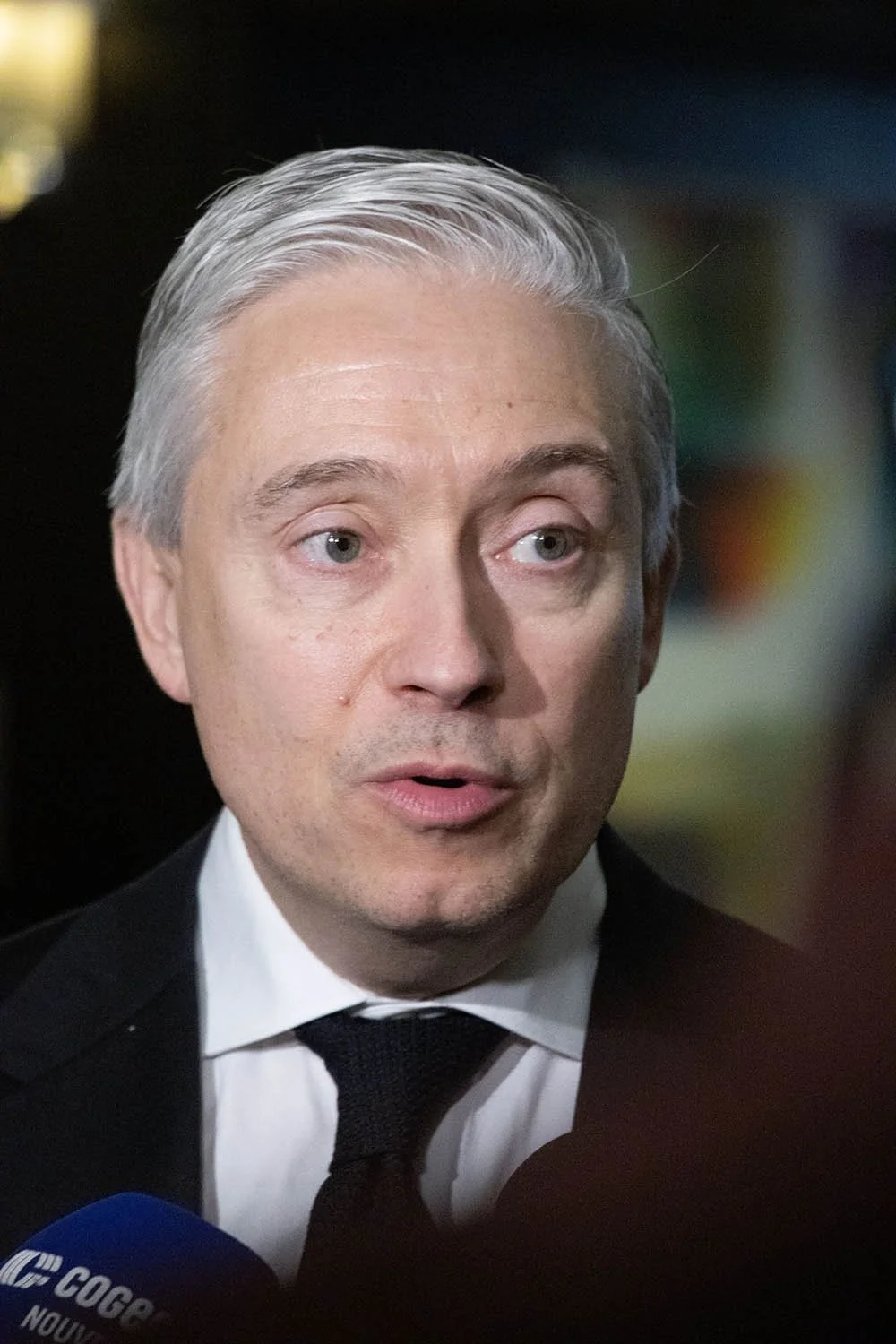
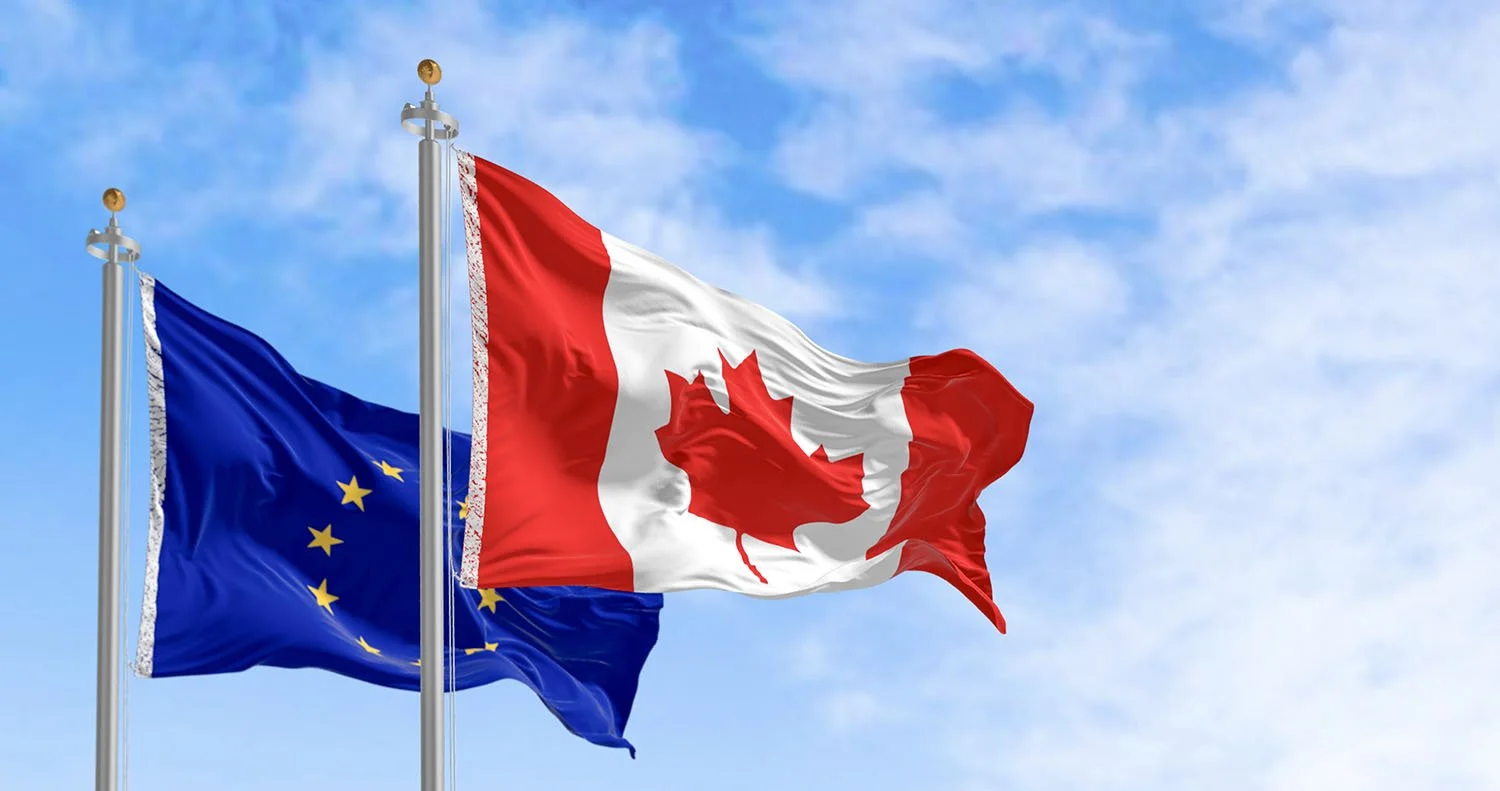
European Commission President Ursula von der Leyen, European Council President António Costa and Prime Minister Mark Carney pictured at the Canada-EU Summit in Monteal. / MEANS & WAYS PHOTO
MONTREAL—Canada intends to become the first associate member of the European Union by next June, Prime Minister Mark Carney announced Friday.
“The full substance, scale and scope of this new form of membership” will be determined in the coming months, he said at a press conference closing the Canada-EU Summit in Montreal alongside European Council President António Costa and European Commission President Ursula von der Leyen.
Following two days of meetings, Canada and the EU launched an economic and security partnership, The Alliance for the Future. The alliance “will leverage our strategic capabilities and a variable geometry of like-minded nations to address common issues. The alliance will focus on increasing our collective sovereignty and resilience in areas such as AI, energy, critical minerals, quantum and beyond, and in parallel, and at the foundation, we are working towards the deepest possible partnership, short of accession, because of our geography, with Canada becoming the European Union's first associate member,” Carney told media.
The Canadian cabinet will meet with the College of the European Commissioners in Canada in March to discuss progress. Carney said the goal is to “conclude these negotiations and discussions” by next June when he will attend European Council meetings.
According to the joint statement, the partnership is “an ever-closer association of Canada to the EU, short of full membership itself, to reflect, through this even closer association, our common endeavour and cooperation towards our shared goals of prosperity, economic security and strategic autonomy.”
Von der Leyen said that the partnership was not meant to be “against” anyone else, presumably the United States.
“Yes, the concept of an associate member is uncharted territory, but we have the ambition, trust, and creativity to shape it together,” she said. “Bilaterally, this is the highest form of partnership. … And in a world of growing rivalries, sovereignty is no longer the freedom to act alone, but it is the capacity to act together. And this is why we are building the Alliance for the Future.”
Costa added: “Our relationship is so special that we want to create something new: to go beyond a simple association, everything short of full EU membership. Our association will be the closest, deepest and most unique of its kind. We will do it through closer engagement at the highest political level. And by identifying shared priorities and coordinating our responses to common challenges. We are already putting this into practice.”
Before the press conference, Canadian ministers and their European counterparts signed a framework agreement on the European Investment Bank (Finance Minister François-Philippe Champagne), an agreement on the European High-Performance Computing Joint Undertaking (AI and Digital Innovation Minister Evan Solomon), administrative arrangements on IRIS2 and Galileo cooperation (Industry Minister Mélanie Joly) and a statement marking the conclusion of negotiations on a Digital Trade Agreement (International Trade Minister Maninder Sidhu).
In addition to reaffirming an “unwavering commitment to effective multilateralism, democracy and to the rules-based international order,” including support for Ukraine, the Alliance also:
Deepens collaboration in the Arctic and implements the Security and Defence Partnership
Advances cooperation on AI security and safety and on digital infrastructure, including access for start-ups and small and medium-sized enterprises
Works towards mutual recognition in digital identity, conformity assessment results for AI systems and cybersecurity
Launches an initiative to improve connectivity between Canada, Europe and Asia through new subsea cables
Strengthens energy cooperation, including a joint long-term feasibility study on liquified natural gas exports to Europe, and accelerates collaboration on critical raw materials and nuclear technologies
Improves the efficiency, resilience and security of maritime supply chains, linking Canadian Atlantic, Pacific and Arctic routes with European ports
Establishes a business council and develops sectoral road maps for key strategic sectors
Facilitates faster, lower-cost cross-border financial transactions
Enhances cooperation on cyber security, law enforcement, immigration information sharing and disaster and wildfire response, and expands student, researcher and youth mobility
“This is a moment to act with clarity and ambition,” the joint statement says. “We are stronger together.”
Carney reiterated that Canada and the EU are leveraging and complementing each other’s strengths while “building our resistance, our resilience, creating more choice, ensuring that we are not beholden to others.”
He added: “Like any major bridge, each side has something to offer the other. We are using our strength. This will create opportunities and will improve all of our lives.”