Canada needs to take more economic risks, rebuild innovation ecosystem: angel investors
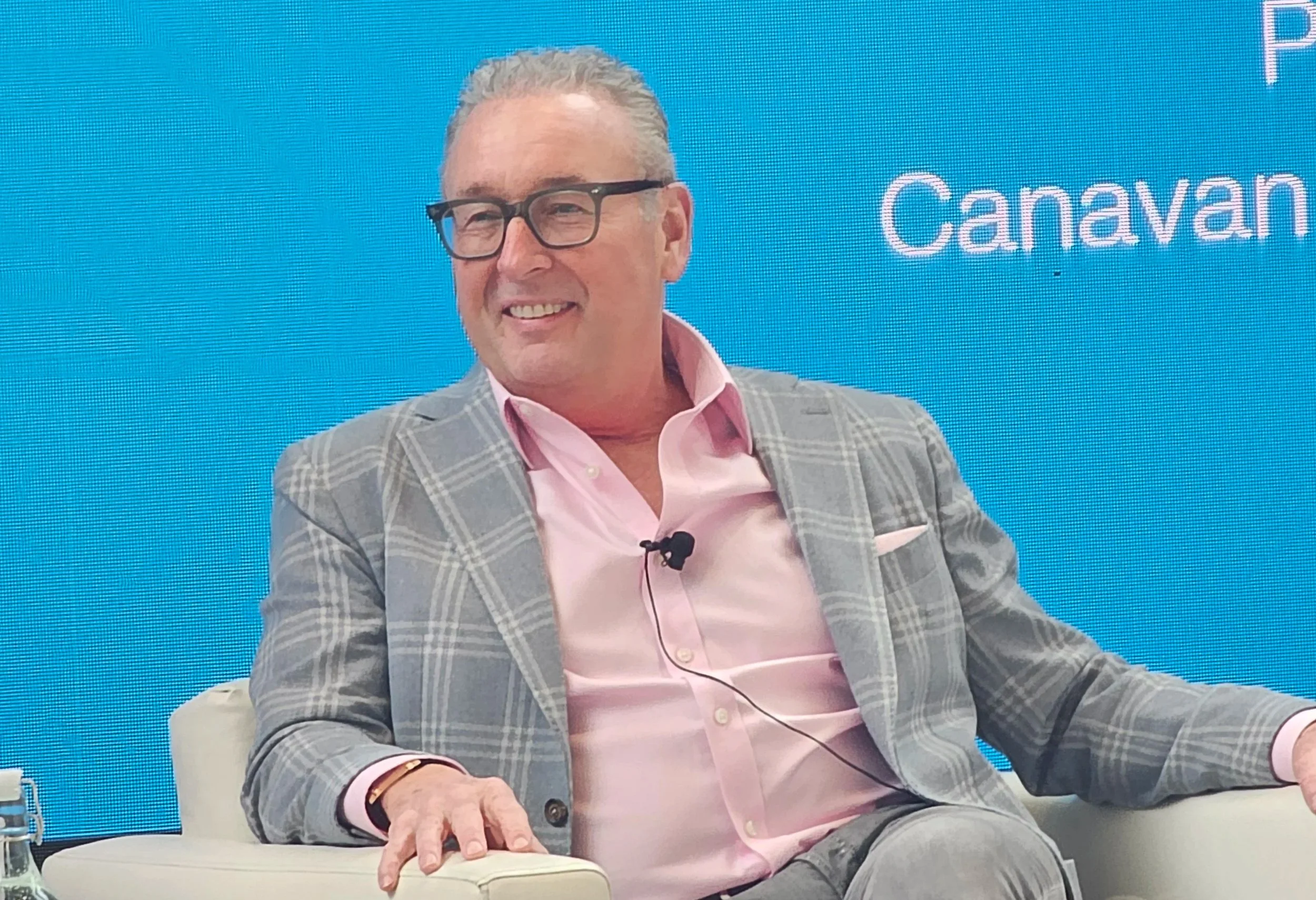
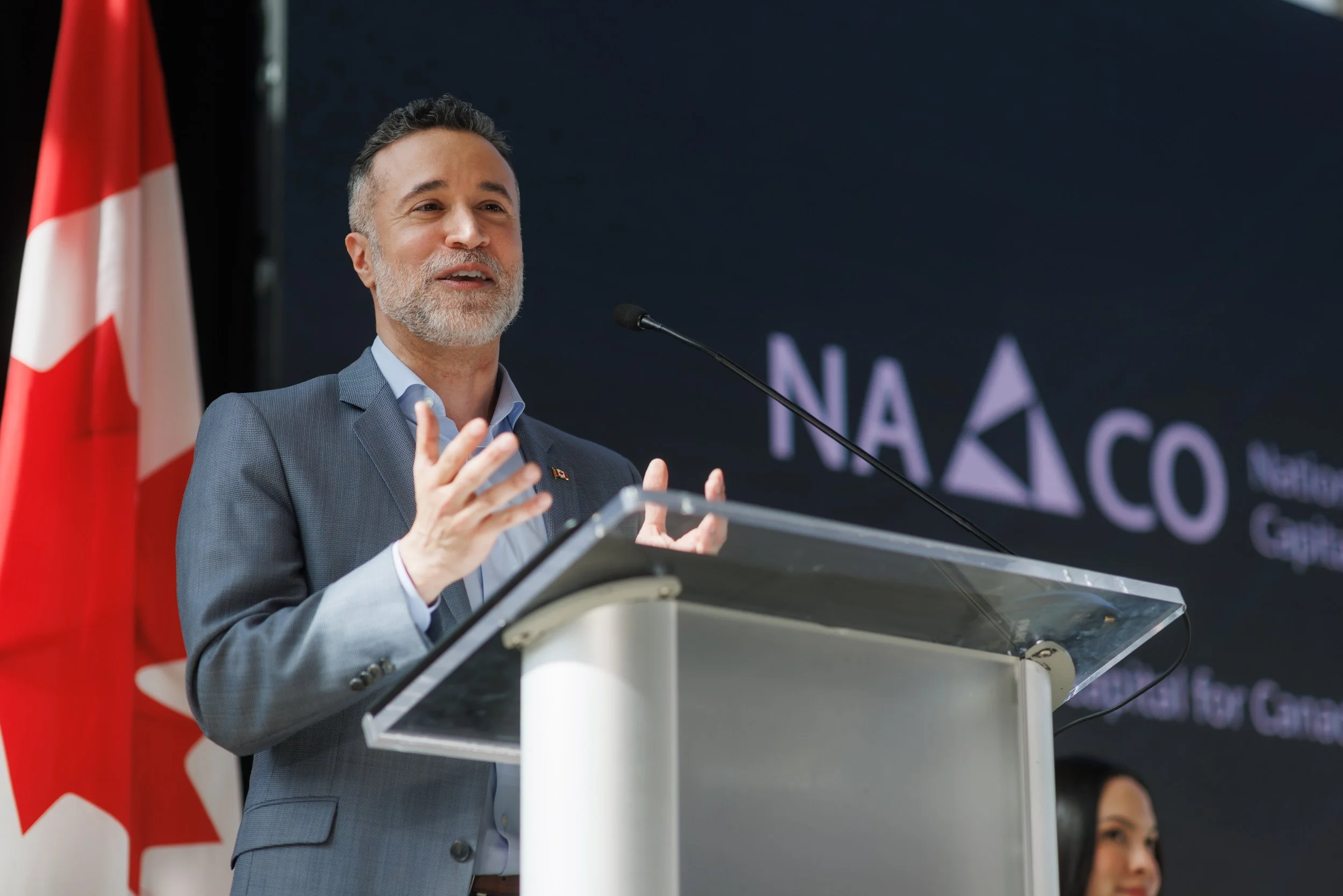
Venture capitalist Joe Canavan says Canada needs to ‘Own the Podium’ on innovation and entrepreneurship. / MEANS & WAYS PHOTO
Canada is at an “existential moment” that demands bold action to rebuild its innovation ecosystem, says venture capitalist Joe Canavan.
Prime Minister Mark Carney said “fortune favours the bold” in his recent Forward Guidance video on YouTube, to which Canavan, Principal of Canavan Capital, responded that words alone aren't enough.
“Bold means we're going to do something that is going to dramatically impact the future and growth of our country,” Canavan told Betakit reporter Josh Scott this week at the National Angel Capital Organization (NACO) Summit in Ottawa.
Conditions for a thriving startup culture were largely in place in Canada in the early 2000s — with U.S. investors telling founders to stay here rather than relocate to Silicon Valley — but a series of policy missteps over the last decade reversed those gains, Canavan said.
“The money started to trickle away,” he said, pointing to wealth redistribution policies and rising tax rates as key issues. “That kind of stuff scares people away. It scares people, it scares capital, it scares opportunity and it scares innovation.”
On the other hand, bold policy could unlock a virtuous circle, he said. “You create more opportunity, you create more creativity. More creativity equals more innovation. More innovation means more companies here. More companies here means more wealth here, more jobs here, more opportunity here.”
But being bold is a lot easier when early stage investment is in place, Chris Moyer, Founding Partner & President of Pelorus Venture Capital, said during a separate panel. He described how his fund launched in 2015 with a $14 million pool anchored by the Province of Newfoundland and Labrador, which contributed 70%. The Business Development Bank of Canada added another 15%. The remainder came from angels and high-net-worth individuals.
‘The companies don’t exist yet’
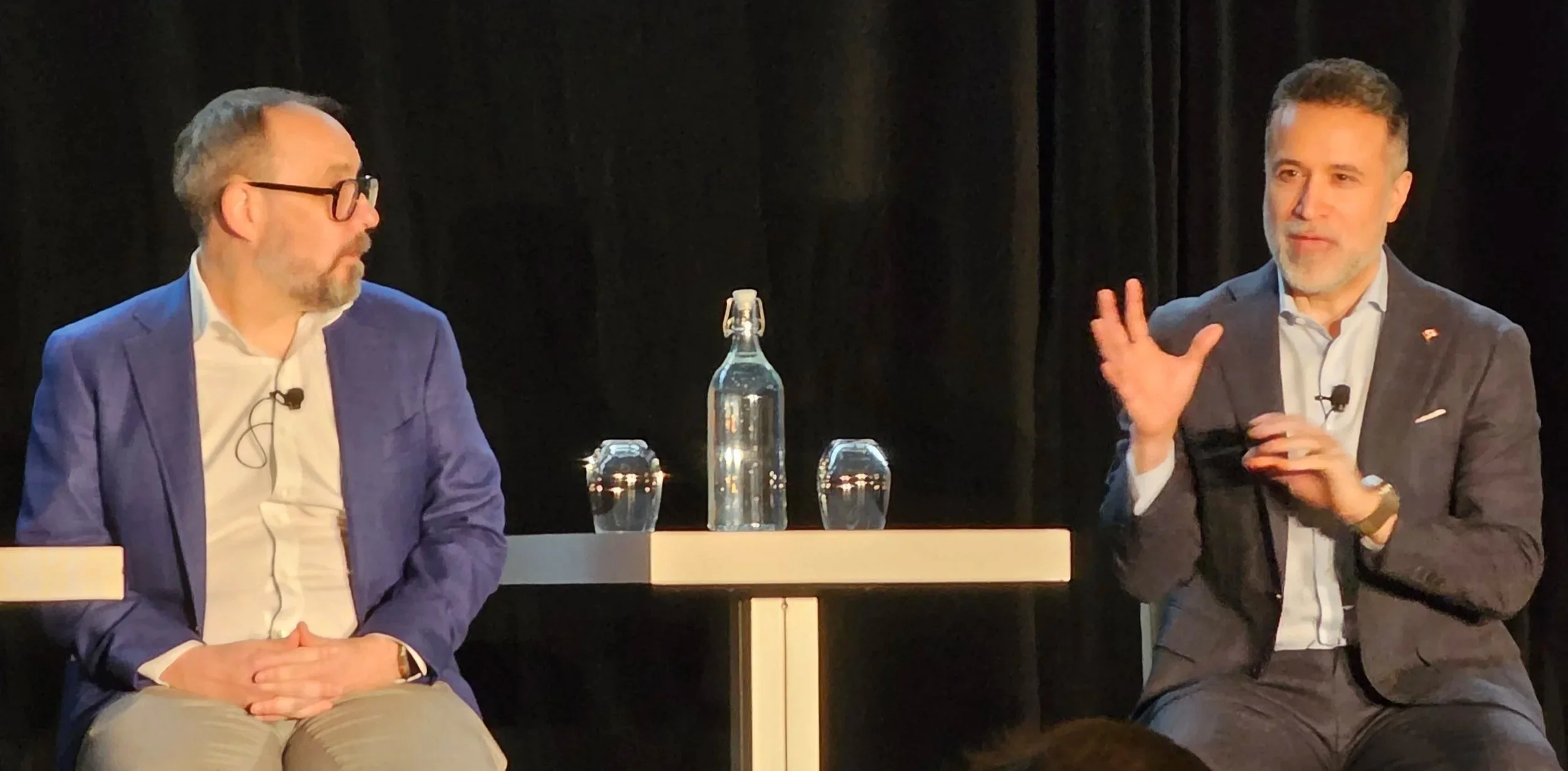
Chris Moyer, Founding Partner & President of Pelorus Venture Capital, and National Angel Capital Organization (NACO) Claudio Rojas spoke about the need for angel investors at the early stage of the entrepreneurship journey at the NACO Summit in Ottawa. / MEANS & WAYS PHOTO
“It was a hard story to tell at that time, because people would ask, ‘Who are you going to invest in?’ And we said, ‘We don't know. The companies don't exist yet,’” Moyer recalled. "But that fund now, in year 11 — that $14 million, we've returned $22 million in cash to those investors. The portfolio is still worth another $50 million and growing.”
The fund has since raised a $26 million second fund and is closing a $50 million third fund, with the latest vehicle writing smaller, $50,000 pre-seed cheques to generate earlier deal flow.
A key design principle, Moyer explained, was keeping the government in the role of limited partner rather than decision-maker. The province has steadily reduced its ownership stake — from 70% in fund one, to 50% in fund two, to 30% in fund three — as private capital has filled the gap.
“Them actually stepping back and saying, ‘Maybe you guys know how to do this better than we do — this isn't a core competency of government,’ has allowed the fund to increase their percentage and more private money to flow into the Newfoundland ecosystem.”
The portfolio now includes:
CoLab, an AI platform for engineering with investment from Insight Partners;
Spellbook, a legal AI company that’s on track to grow from $30 million to $100 million in revenue this year;
Sparrow, a startup that uses an iPhone to detect critical heart valve issues.
Discussing Sparrow, Moyer said “Instead of going to see a cardiologist, a frontline medical staff can actually just place the iPhone on your chest.” He added Sunnybrook Hospital in Toronto is conducting a major study on the technology.
Claudio Rojas, CEO of NACO which represents 4,000 angel investors who have deployed $1.8 billion across more than 2,000 Canadian companies, argued that the decline of angel networks in Atlantic Canada has left the entire region's innovation ecosystem underserved.
“Venture capital funds cannot do the work that angel investors do,” Rojas said. “It's a distraction from their core function. Angel networks are exceptionally important for knowledge sharing, for mobilizing new investors in the ecosystem. Venture capital funds are the beneficiaries of those angel LPs.”
Angels are engines of investment and anchors for companies
Moyer echoed those comments, describing angels as essential: “The angel community is key, because they invest in us, and they invest alongside us, and that's become a really powerful engine.”
Rojas invoked Canavan himself as a prime example of the value an aligned angel investor brings. “Joe Canavan came from the financial industry. He invested in Wealthsimple. He didn't just write a $250,000 cheque. The interests were naturally aligned,” he said, adding that “angel investors are critical to anchoring the companies.”
Angel investors are unique because they are “patient” and “not on the same clock as venture capital,” Rojas said. More importantly, they are personally invested and often from the communities in which they help founders grow. “The interests are aligned at a human level.”
NACO has called for $750 million in government support for early-stage investing — $500 million in matching funds for pre-seed, seed and Series A, and $250 million for angel networks and early-stage organizations spread across 125 communities over five years.
“Big cities do not have a monopoly on great founders,” Rojas said. “It's critical to the economic growth of the country that we find those founders — be it angel networks with a mechanism to do that and in smaller venture capital funds.”
Canavan said the fact that he routinely has to convince founders to stay in Canada is itself a sign of failure. “It is really troublesome.”
He urged Canada to invoke an “Own the Podium” mentality when it comes to economic growth and entrepreneurship, referring to the same dedication of resources and long-term investment required to win Olympic medals or produce world-class athletes. “It's about intentionality. It's about focus and desire and strategic commitment of people, of resources, of policy, of capital. We need to build it here intentionally. The time is now.”
Rojas agreed, saying governments, founders, investors and Canadians all have to take risks. “The risk is worth the reward,” he said. “There's a very close relationship. The greater the level of risk, the greater the level of reward. There's a downside, but there's also an upside. We need to tilt in the direction of risk.”