Belanger says Rural Canada is the $383-billion engine everyone overlooks
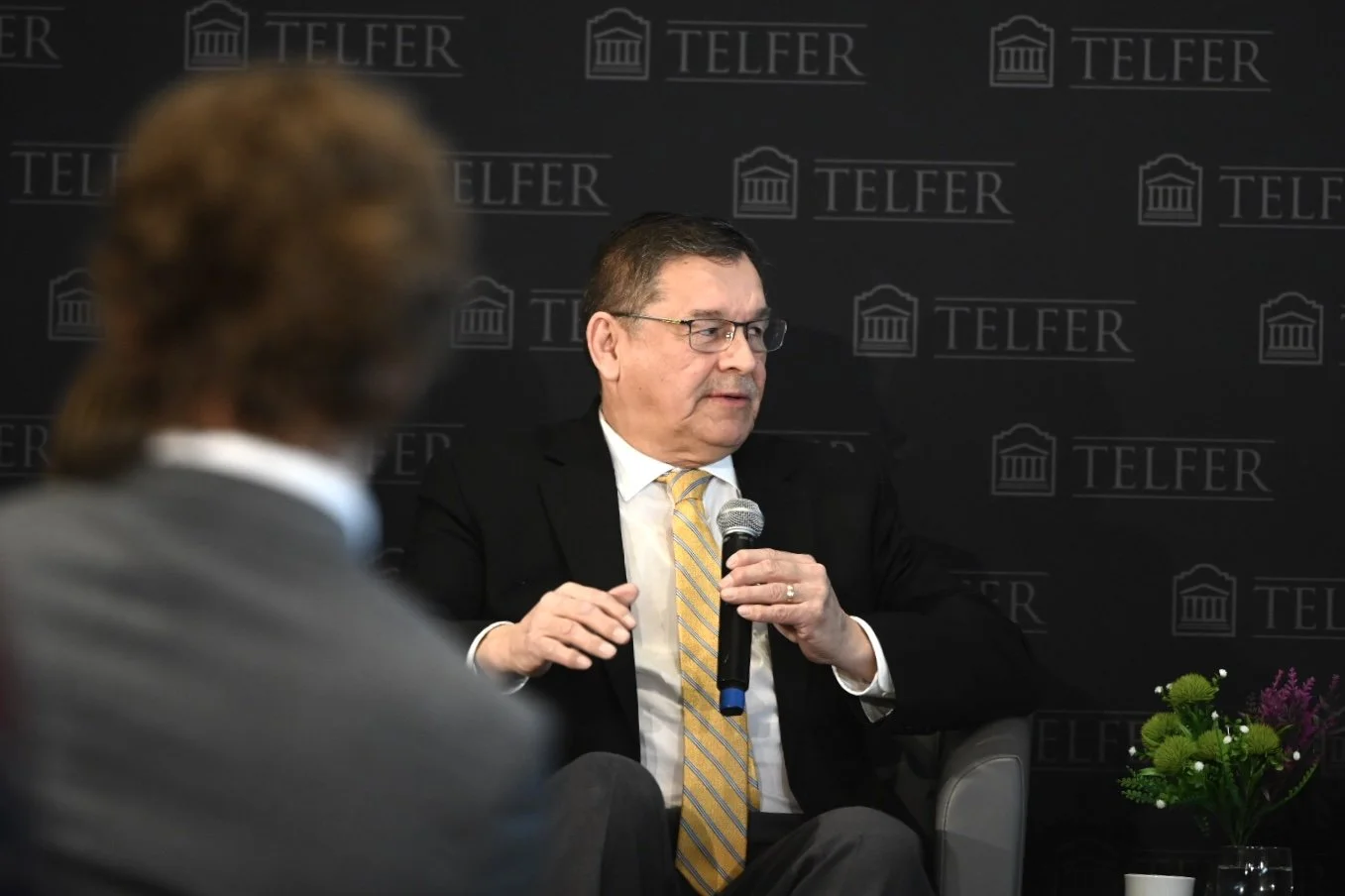
Many people overlook the fact that ‘Rural Canada accounts for over 13% of the national population, and yet they contribute 27% of its GDP,’ says Secretary of State (Rural Development) Buckley Belanger. / COALITION FOR A BETTER FUTURE PHOTO
Canada's economic future cannot be built without a deeper commitment to the communities that already punch well above their weight — that's rural Canada, says Buckley Belanger, Secretary of State for Rural Development.
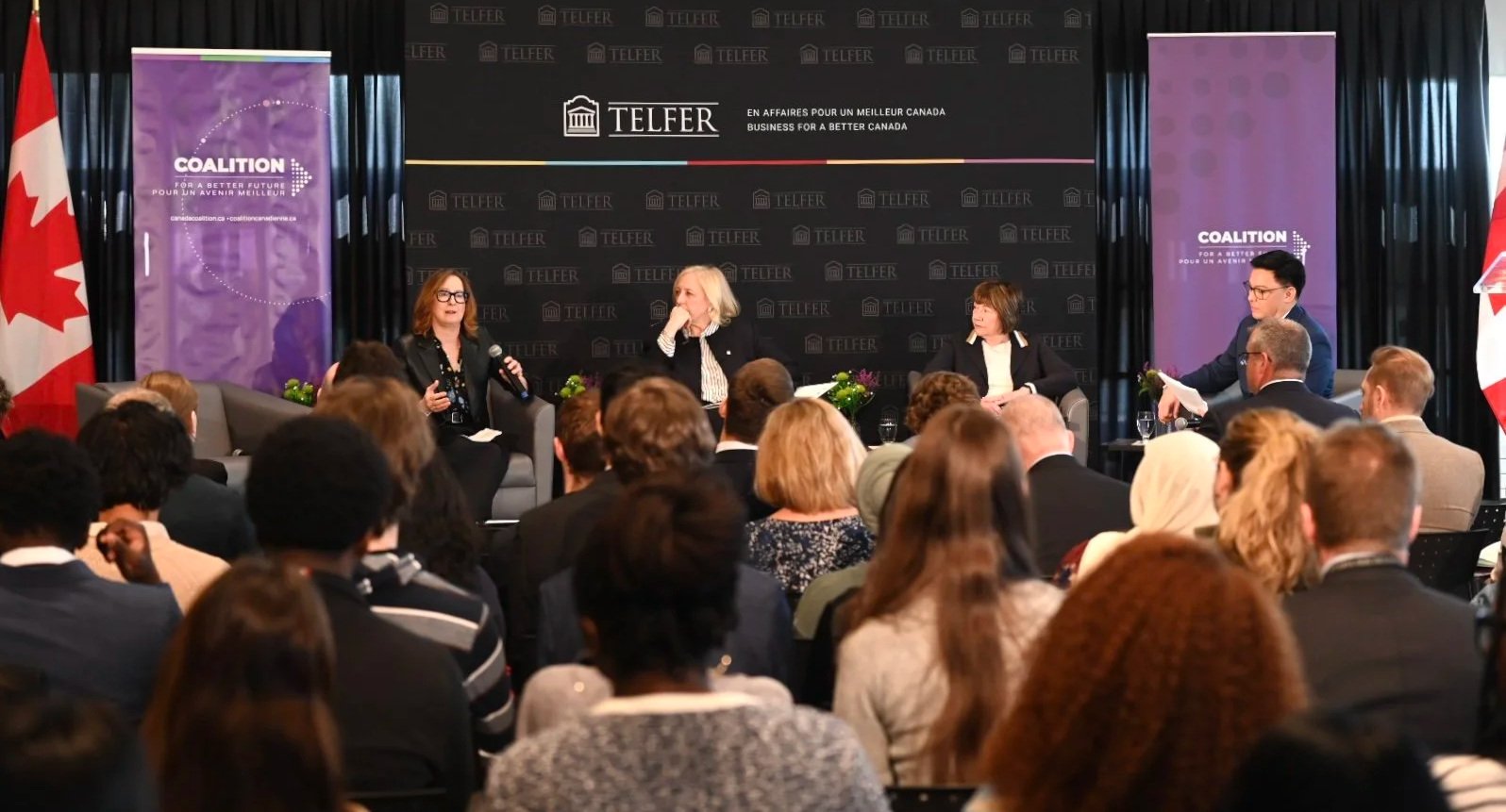
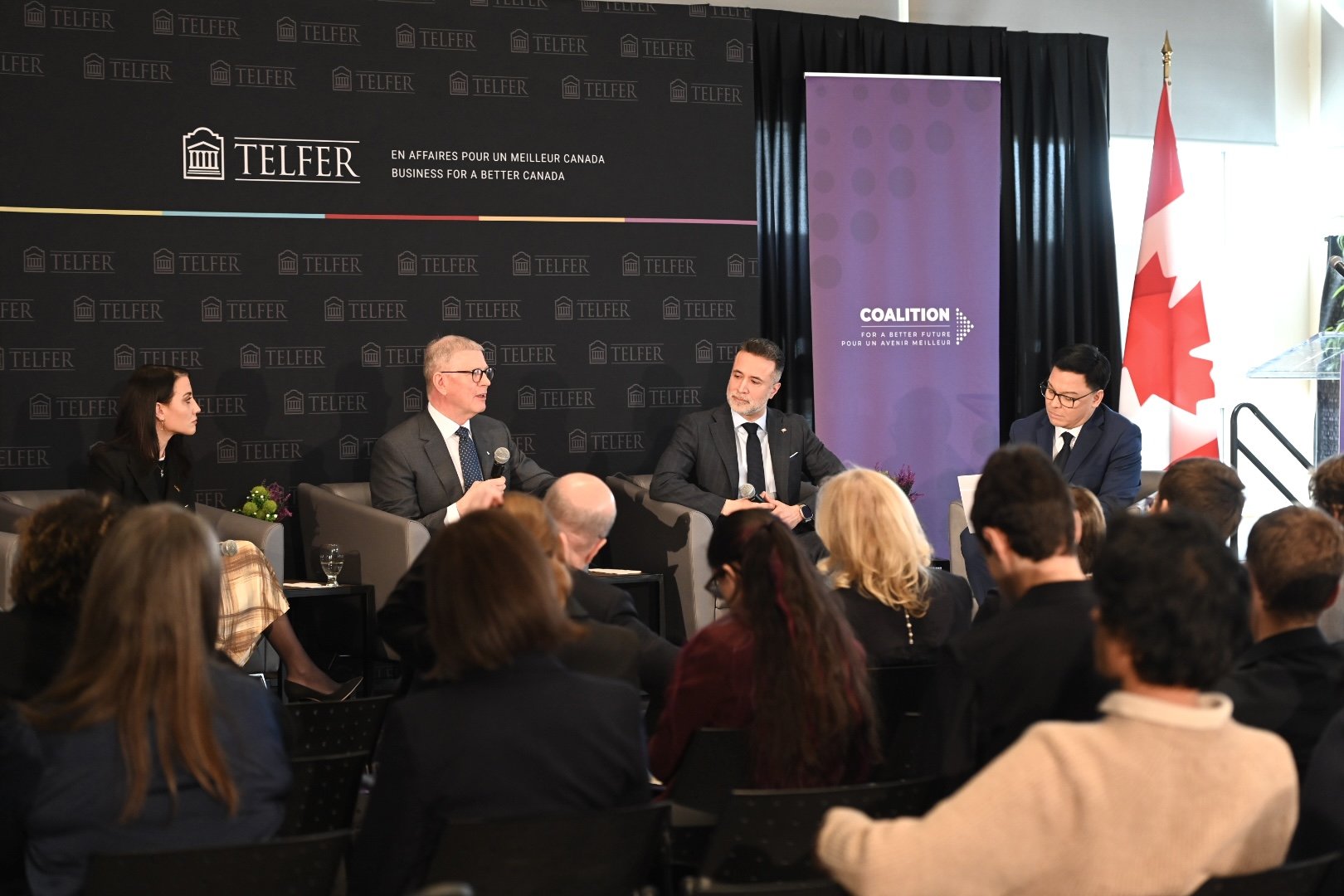
"Rural Canada is ready to prove to the rest of Canada that we're punching far above our weight," Belanger said at the Coalition for a Better Future's Scorecard Reporting Event on March 26. "We want absolutely every aspect of our economy pumping on all cylinders."
When asked by moderator Michael Serapio whether a rural lens on all public policy should be considered in decision-making, Belanger said, “Absolutely. There are different folks that have different perspectives on how we apply the rural lens and we can bring various scenarios, various matrices on how to build that rural lens.”
The Coalition for a Better Future released its annual Scorecard Report at the event. The report tracks 21 economic metrics and how Canada is meeting the coalition's goals for each one. The report, Time to Execute: Canada’s Crucible Moment, includes an analysis on rural Canada.
The Coalition uses both its national Scorecard and supplementary data to gauge the health of rural regions. It does so because "developing these communities is no longer just a moral obligation — it is a critical economic imperative."
Belanger told the audience: "Rural Canada accounts for over 13% of the national population, and yet they contribute 27% of its GDP." He said it's something too many policymakers overlook.
The report notes that during this time of geopolitical tension and uncertainty, rural Canada's people, resources and communities "have become the unsung heroes of our country’s success story."
Rural Canada is an industrial powerhouse
"Rural Canada is far more than a collection of scenic landscapes; it is an industrial powerhouse accounting for more than 25% of our national output. Our collective prosperity depends heavily on exports from these regions to fuel growth," the report says.
Rural Canada accounts for more than 25 per cent of Canada's national output, with exports reaching $383 billion and 53 per cent of the total value of all Canadian merchandise exports in 2024.
"Yet, despite this massive contribution, a deepening divide in infrastructure and services threatens to stall this momentum," the report says. "The disparities between urban centres and rural regions represent systemic failures that threaten overall economic stability. While urban Canada thrives on service and tech, rural Canada remains the nation’s primary engine of production."
Claudio Rojas, CEO of the National Angel Capital Organization (NACO), echoed the urgency of getting economic policy right beyond Canada's major urban centres. "We have this massive geography. We have entrepreneurs in all regions of the country and it's important that we're building companies in the communities, not driving the young people out of communities as they look to find jobs elsewhere. So we need to build where the entrepreneurs are.”
"We need to build where the communities are,” he said. “We are way too concentrated geographically in a small handful of cities. It is creating massive turbulence as it relates to our unity as a country. So how we design our economic policy to be regionally inclusive... And then from there, how do we empower these enabling technologies, AI, quantum and others that cut across all industries in order to drive greater efficiencies, greater economic growth across all industries?"
Broadband isn’t a partisan issue: Raitt
Broadband access was another central theme during the event. Belanger outlined ambitions for universal high-speed internet coverage, describing a partnership that includes telecommunications and satellite companies. "One of the things that I would say is an investment piece around connectivity will pay off for many, many years," Belanger said, pointing to telehealth as a concrete example of what connectivity could unlock in underserved regions.
Earlier in the discussion, Coalition co-chair Lisa Raitt, Vice Chair, Global Investment Banking at CIBC Capital Markets, reinforced the political stakes of the issue. She said broadband is not a partisan issue. “Conservatives mainly represent rural parts of this country, so they’re very much in favour of the investments being made in rural broadband,” she said. “That’s a positive thing that makes a lot of sense, but it’s also the one thing that gets to the heart of a vote of a Canadian. If you don't have rural broadband, you're not feeling really good about the government and you're not even going to think about voting for them."
The role of Indigenous consultation in resource and infrastructure development was also discussed. Coalition co-chair Anne McLellan, former Liberal minister, acknowledged how dramatically the landscape has shifted. "Back when I was minister of natural resources, there wasn't a whole lot of consultation with any community, but particularly Indigenous communities," she said.
She credited the courts with driving much of that change, noting a "constitutional obligation" now exists to acknowledge Indigenous rights.
Raitt urged corporate boards to treat Indigenous consultation as a foundational business requirement, not an afterthought. "When you're on your board of directors, make sure you say, okay, when did we start the consultation — have we approached the community about this yet? It's not something you tick a box on later. It's something you deal with as part of your business plan."
McLellan noted that the government’s build agenda is dependent on rural and small town Canada. “Their ambitions run through rural and small town Canada,” she said, adding that rural communities need “to be considered” in public policy creation.
“Virtually all those big projects go through rural and small town Canada,” she said. “Someone needs to start understanding what their needs are or else it will be difficult to achieve the ambition they're talking about.”
This is especially true for AI projects and data centres, the Coalition’s report says.
“Rural Canada is now expected to provide the backbone for the nation’s AI ambitions. AI data centres — industrial cities made of servers — require thousands of megawatts of continuous power and millions of litres of water for cooling, resources derived lmost exclusively from rural regions, “ the report notes. “In Alberta, a single hyperscale data centre can consume 11 million litres of water a day. The risk is a new form of disenfranchisement: rural communities absorb the environmental risks and resource constraints, while the high-paying ‘brain power’ rewards consolidate in major cities.
Rural action plan coming
Belanger said a national Rural Development Action Plan is taking shape, built on more than 3,000 online submissions and roundtable consultations across provinces and territories. He described a planned federal-provincial-territorial gathering, noting the process has generated genuine enthusiasm. "Rural Canadians are coming out and sharing all of this, all these progressive ideas on how to build the economy, how to address some of the infrastructure," he said.
The Coalition's report noted one such organization, Shorefast, which argues that rural Canada should not try to “escape” its natural assets. Rather, rural Canadians should "build a future on them that is regenerative rather than purely extractive. By stewarding these assets for the long term and maintaining local ownership, rural communities can turn their comparative advantages into permanent strength," the report says.