&!*%’s about to get real for Carney
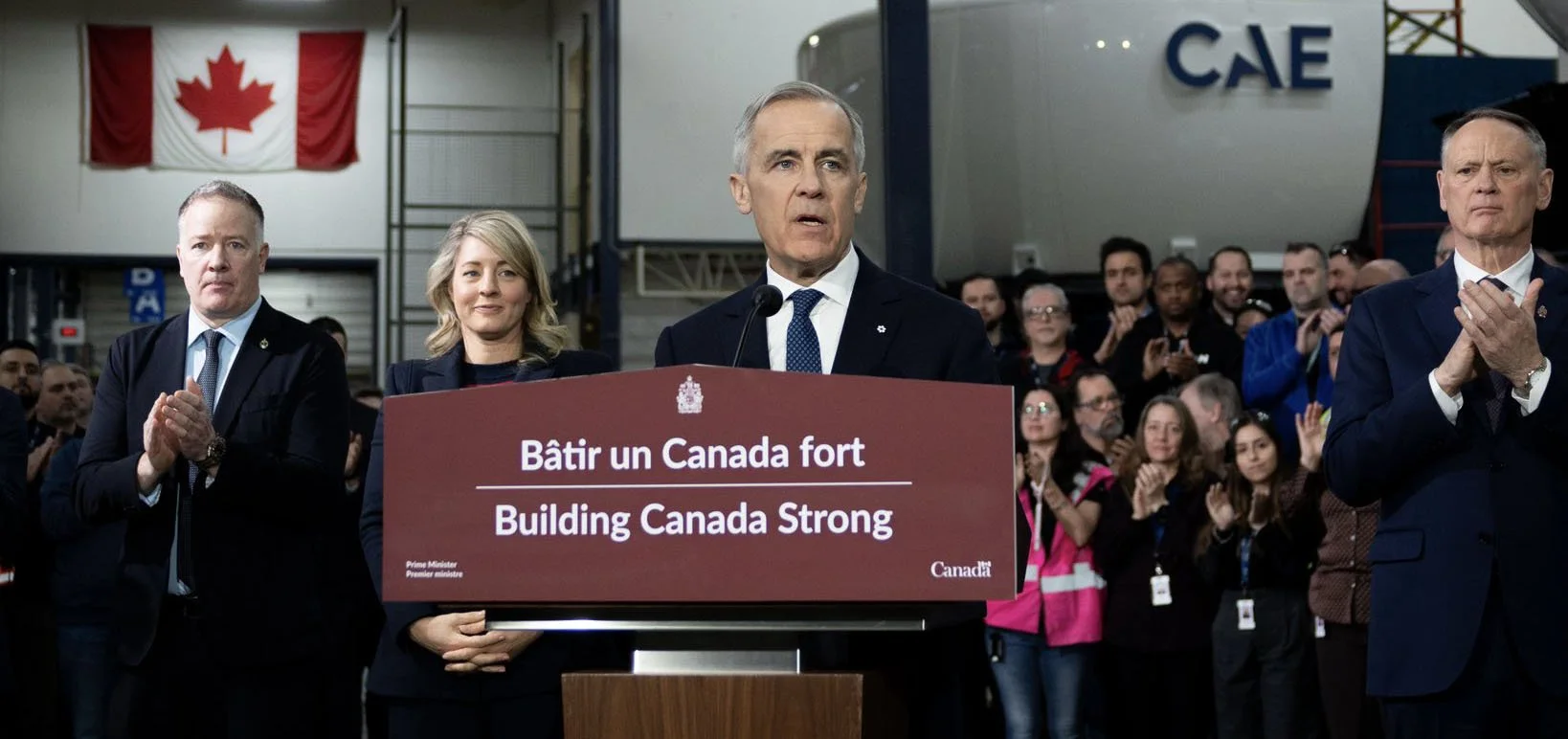
‘Against the unpromising historical backdrop of consultations and legislative processes that began with high hopes but failed to deliver, Carney has launched a truly revolutionary set of proposals,’ when it comes to major projects, writes Ken Polk.
When a government is confident on an issue, it legislates. When it's not, it consults. That, at least, has been the history of how federal governments — Conservative and Liberal — have dealt with controversial issues.
Frequently, such consultations end up gathering actual or “digital dust” on actual or “digital shelves.” Relegated there in the noble service of governments playing for time in the hope that an apparently pressing issue will go away, or be supplanted by another pressing issue that a government may be better prepared to deal with.
Which makes the release of Getting Major Projects Built in Canada - Discussion Paper on Proposed Legislative, Regulatory, and Policy Reforms, a departure for Prime Minister Carney,
Its release is a first for a Prime Minister who, to date, has prioritized action over discussion. A wave of patriotic revulsion against the errant malice of President Donald Trump fueled the Prime Minister's election and has been the abiding impulse of everything he has done since.
But the Discussion Paper suggests Carney understands translating election promises into action will be a much more challenging test of his ability, and may cost more in political capital than he’s willing to spend.
A legislative and regulatory revolution
On its face, the Discussion Paper proposes to put legislative and regulatory flesh on the bones of the statutory authority to speed up major project approvals that the government acquired with the passage last year of the Build Canada Act.
But the proposed legislative and regulatory fast-tracking of major projects is nothing short of revolutionary for a country where adding hurdles in almost every field of commercial endeavour has become something of a sacred mission for generations of legislators and regulators alike.
Federal project decisions would be delivered in one year. A single project authority would be established and required to submit each project to one federal review, not the several that can now occur, often sequentially. Consultations with Indigenous Peoples would be coordinated through the new Consultations Hub to address the many redundant and overlapping consultations that currently take place. The government would obtain the authority to create specific Federal Economic Zones (e.g., for transportation or energy) where certain development activities are pre-approved, subject to conditions.
The paper is written with the brevity and urgency indicative of a government in a hurry. Indeed, intervenors have been given only 30 days to submit responses. And the government “will be moving quickly to introduce legislation following the engagement period.” At least that is the plan.
The two audiences of concern to the Discussion Paper are investors — domestic and global — who have grown wary over the years of the existing thicket of unwieldy, unpredictable approval processes, and Indigenous Canadians, without whose buy-in, any major project may well be a practical impossibility.
With September’s Canada Investment Summit in view, the Discussion Paper will be a bright, shiny thing to show attendees that Canada is open for business again. If legislation is on the House of Commons Order and Notice Paper, so much the better.
Conservative redundancy; NDP opportunity
An audience that seems not to be of immediate concern to the Prime Minister is Parliament. Not only because he now has a majority, albeit a nominally thin one, but because it is difficult to imagine a single Conservative MP voting against legislation that would give effect to the proposals laid out in the Discussion Paper. Especially since the proposals could have been cribbed directly from the Conservatives’ 2025 platform.
Opposition Leader Pierre Poilivre has struggled to be relevant in the slipstream of Carney’s political larceny. The coming debate over the Discussion Paper may only make his political redundancy more painfully vivid.
NDP Leader Avi Lewis, on the other hand, is likely rubbing his hands with glee. He can argue, with some reason, that the Discussion Paper looks like it was written by a former investment banker for the benefit of Bay Street and Wall Street. He will no doubt use it, and the ensuing legislative and regulatory debates, as a meaty opportunity to reassert the NDP’s place as the authentic authoritative voice for progressive voters.
Making the sausages will test Carney’s political reflexes
It has been said that laws are like sausages; it’s better not to see them being made. Advancing beyond the Discussion Paper stage will be a supreme test of Carney's sausage-making abilities.
Though the prospect of an NDP revival may be of only passing concern to a Prime Minister who is on a transformative economic mission, members of the Liberal Caucus in big cities, where the NDP is, as a rule, their primary election opponent, may feel somewhat less sanguine. So, the Prime Minister will need to watch his back for friendly fire.
More challenging still for Carney will be the inevitable deconstruction through the consultation and subsequent legislative processes of the Discussion Paper's bold ambitions into discrete case studies of how they could harm the interests of different audiences.
There will be stakeholders — expert and non-expert — who will argue that this seeming strip mining of the Canada's regulatory state poses a very real threat to their communities, on the one hand, or puts the future of the nation at risk, on the other, through the abandonment of sustainability principles that successive federal governments have for decades embedded ever more deeply into Canada’s environmental assessment regimes.
In politics, as in physics, for every action there can be an equal and opposite reaction. So the skill with which Carney and his team meet and overcome objections will determine whether the momentum generated by the Discussion Paper is dissipated or accelerated.
Against the unpromising historical backdrop of consultations and legislative processes that began with high hopes but failed to deliver, Carney has launched a truly revolutionary set of proposals.
He does not view this as a mere performative time-wasting exercise, as so many others have been. He wants results. He has told voters that “Canada has to build things faster than we’re used to.” And he will argue that this is the way you build bigger and faster.
He has put all of his chips on the table and cannot afford to fail. He has had a political honeymoon riding a frothy wave of patriotic voter support.
With the Discussion Paper, the &!*%’s about to get real for Carney.