The NDP has its own Pierre Poilievre problem
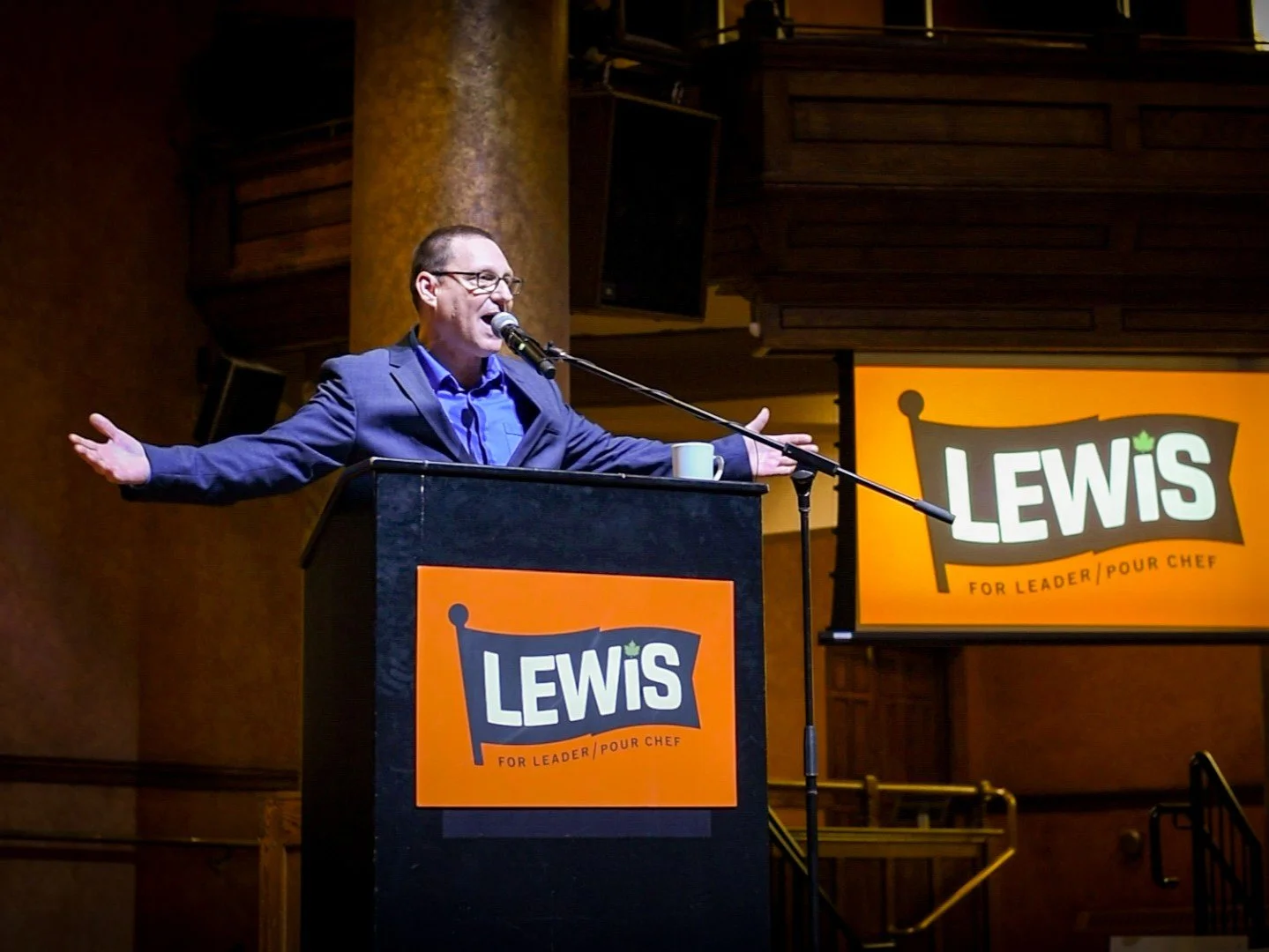
Avi Lewis is considered the front runner in the NDP leadership race. Party members will vote for their next leader at their Winnipeg convention March 27-29. / TWITTER PHOTO
Much has been written since last April’s election about the political anchor that Opposition Pierre Poilievre has become on the Conservative Party's fortunes.
After dominating federal politics for the two years leading up to the 2025 election, Poilievre’s political spell now seems not to enthrall many beyond the 85% of the Conservative base who endorsed his leadership in January.
Finding some way to regain his political mojo against Prime Minister Mark Carney is a dilemma that the Conservatives will likely have a decent interval of time to grapple with since it seems almost certain to achieve a majority with the outcome of the three April 13 by-elections in Ontario and Quebec.
The New Democratic Party is preparing to gather in Winnipeg from March 27-29 to choose a new leader. As it does so, the party faces its own lingering “Pierre Poilievre quandary,” one it has little control over, but which, beyond a renewed policy set or a new energized leadership, will undoubtedly shape and likely limit its prospects for a recovery in the next federal election.
Conservatives are not the only victims of Carney's political larceny
One of the neat political tricks that Carney has pulled is to pick up much of the Conservative leader‘s agenda. Less commented on is the way the Prime Minister has also cornered the market on many ideas and rhetoric that have, for decades, been the almost exclusive domain of the NDP.
The dangers of corporate globalization, Canadian economic sovereignty, a made-in-Canada industrial strategy — all of these ideas that have been core NDP messages that, until Carney made them his own, were mostly treated as quaint left-wing nostalgia for the 1960s. That they have become mainstream just as the NDP itself collapsed must be deeply galling to the party.
The meaning of all of this is, of course, profound for Canada's domestic and international economic strategies. The search for self-sustaining domestic economic tools that are resilient in the face of this change is quite rightly what the Carney government is seized with. The steadily widening economic impact of the U.S.-Israeli assault on Iran is, in some ways, just more evidence of the need for Canada to depart from the optimistic globalization orthodoxy of the last half-century.
Canadians have little interest in the ramifications of this tectonic shift. Right now, for instance, they care more about the skyrocketing price of gas than they do about the NDP’s future. But the party can at least say it was a champion of Canadian economic sovereignty long before it suddenly became cool again.
Carney's larceny only built on Poilievre’s populist outreach to union and young voters, traditionally core NDP constituencies, forcing the party to fight a near-fatal two-front war that cost them 70% of their seats and official party status in the House of Commons.
The NDP will hope the Winnipeg convention is the first step toward finding a distinctive message that can bring its progressive voters back home. And like the Conservatives, the apparently imminent Liberal majority will give the new leader and brain trust more time to land a new message and policy suite.
The Pierre Poilievre quandary
As a rule in modern federal politics, the NDP's seat potential in elections is defined by the chance for a Conservative government, the avoidance of which seems to be Job 1 for most progressive voters. If there is a chance for the Liberals to stop the Conservatives, then many voters who would otherwise vote NDP tend to migrate to the Liberals at the close of an election. The party has achieved its highest number of seats when the Liberals have had no chance to stop a Conservative win — 1984, 1988 and 2011, for example
The Trudeau Liberals on the seeming verge of political vaporization at the hands of the Poilievre Conservatives in 2025 should have shaped up as a solid one for the NDP. That it didn’t obviously can be initially attributed to President Donald Trump’s unprovoked attack on Canada after he won a second term.
But the NDP puzzle is that the federal ballot polarized into a two-party race, where Poilievre, though losing the election, still managed to gain 24 seats, 12 of them from the NDP.
This suggests that, even as his lead over the Carney-led Liberals rapidly collapsed amid the Trump churn and the perception of him as a Canadian version of Trump, Poilievre's populist message and issue set retained some staying power.
The quandary for the NDP is that Poilievre’s recent ringing endorsement from his party leaves them in the worst of political worlds. Absent some unforeseen rebellion, Poilievre is not going anywhere. The broad mass of Canadian voters indicated that they don’t think enough of him to make him Prime Minister, given a credible alternative in Carney. But enough voters supported him to remain a threat to the NDP base.
No ordinary time
Were this an ordinary political time for the NDP, their comeback strategy would be built on biding their time until voters’ attachment to the Liberals ebbs enough for the party to find a viable place to the Liberals’ left. But this is no ordinary time.
Unless he can change Canadians’ broad perception of him, Poilievre will remain a human get-out-the-vote machine for the Liberals in the next election. Unless the NDP can match Poilievre’s populist appeal, he will remain a threat to their core vote.
As long as these Poilievre-driven dynamics remain in place, the NDP bids fair to be squeezed out in two-party Liberal-Conservative contests.
At the moment, the Liberals are on a huge roll, enjoying the kind of poll support that usually follows the election of a new government swept to power on a wave of change. That the first anniversary of Carney's premiership marks, in fact, 11 straight years of Liberal government no doubt provokes communal gnashing of teeth among all opposition parties.
Inevitably, the government’s popularity will fade. The challenge the NDP faces is how to break out of the two-party dynamic, regardless of the Liberal troubles to come, which seems to be set in stone.
So as they head to Winnipeg, the basic quandary for the NDP remains: what can they do about their Pierre Poilievre problem?