Carney is thinking bigger than most of us realize
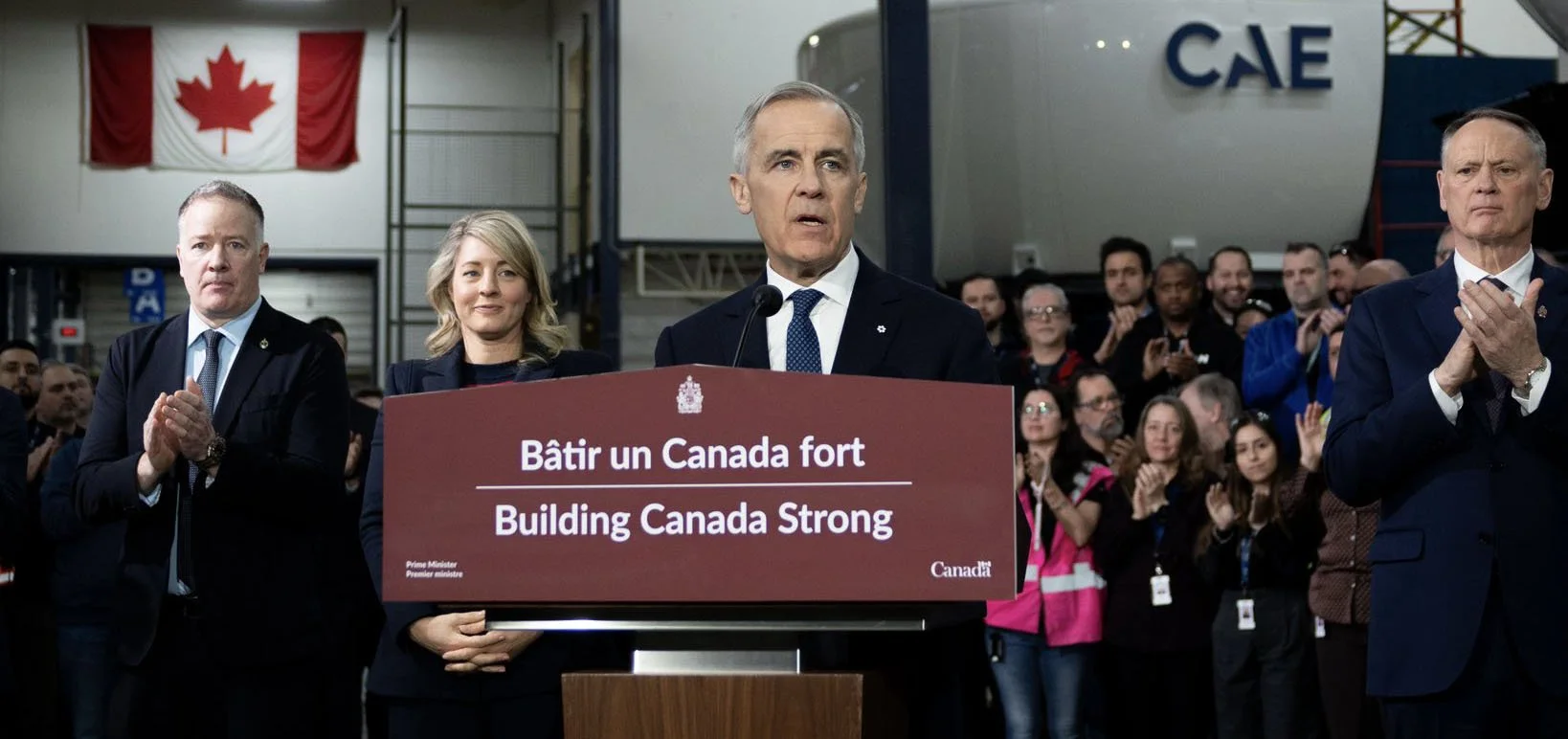
‘Canada’s new Defence Industrial Strategy will transform our military and defence supply chains — creating good careers at home, opening new markets for our businesses, and equipping the Canadian Forces with the world-class equipment they need to protect Canada and our Allies,’ Prime Minister Mark Carney said on social media. / SCREENSHOT
Mark Carney is thinking much bigger when it comes to Canada’s economy and role in the world than most of us have realized.
While opposition MPs are focused on incremental legislative clauses and reporters speculate about a snap election, the prime minister is looking far beyond the parochial confines of Parliament Hill.
Piece by piece, he is laying the groundwork for a Canada that — if he is successful — will in many ways be unrecognizable from the country we knew during most of the postwar era.
Without a whole lot of fanfare, Carney is positioning Canada as a leader in nothing less than an entirely new, hoped-for global realignment.
Canadians are only beginning to get a grasp on the breadth of this Liberal government’s aspirations and goals. Asked by a reporter about the scope of this far-reaching global effort, Carney said it’s all “hiding in plain sight.”
Restoring global networks
The prime minister’s forward-looking international foray aims to help knit together trade and security alliances that could restore global networks of rules-based, cooperative commerce independent of a U.S. government that has demolished 75 years of liberalized trade arrangements.
Having used his speech at the World Economic Forum to position our county as a prime mover in this potentially historic shift, Carney has continued to pursue it on Canada’s behalf in his role as Ottawa’s chief travelling salesman.
As a result, Ottawa has signed 12 new trade deals with countries around the world in the past six months. And his next push will be to try to resolve 15 years of unsuccessful free-trade jockeying between Canada and India, which alone has a population of 1.4 billion
In particular, Carney is playing a central role in an effort to create one of the world’s largest trading blocs. The Comprehensive and Progressive Agreement for Trans-Pacific Partnership would bring together the EU and the 12-nation alliance that includes Canada and other Pacific nations such as Japan, Mexico and Australia (but not the U.S., which backed out under President Donald Trump).
Coupling the CPTPP with the 27-member EU would establish a trading bloc of 1.5 billion consumers. Being a CPTPP member and having a free-trade pact with the EU, Canada is in a unique position to try to help bring Europe and Pacific nations together in what would be a game-changing trade grouping, Carney said Tuesday.
Variable geometry
“In a world where the multilateral system has been undermined, this is variable geometry,” the prime minister told the media. “You start to put together blocs of like-minded countries on different issues—Canada can play a role there.”
At home, in another historic initiative, the Liberal government is moving radically to redefine Canada’s defence capability by not only building up the military but aiming to leave behind the many decades of pronounced dependence on its powerful U.S. neighbour.
Starting with an initial $6.6 billion commitment, the goal is to establish here what the Americans used to call a military-industrial complex that underwrites economic activity as well as security. Importantly, exports of military equipment are viewed as an essential part of this strategy–linked to new defence and security agreements with Canadian allies.
In scope and ambition, the Defence Industrial Strategy is in keeping with federal government plans for autos, energy, home-building and manufacturing in general.
But as with all of these initiatives, the defence blueprint is asking a lot of Canadian financiers, investors and manufacturers to grasp fresh opportunities and elevate production at a pace unseen in decades.
And in particular when it comes to military production, success will hinge on the federal government’s ability to reform its notoriously slow and inefficient procurement bureaucracy. Without that, all the good intentions and money in the world will make little difference.