Labour measures a Senate flashpoint on Bill C-39
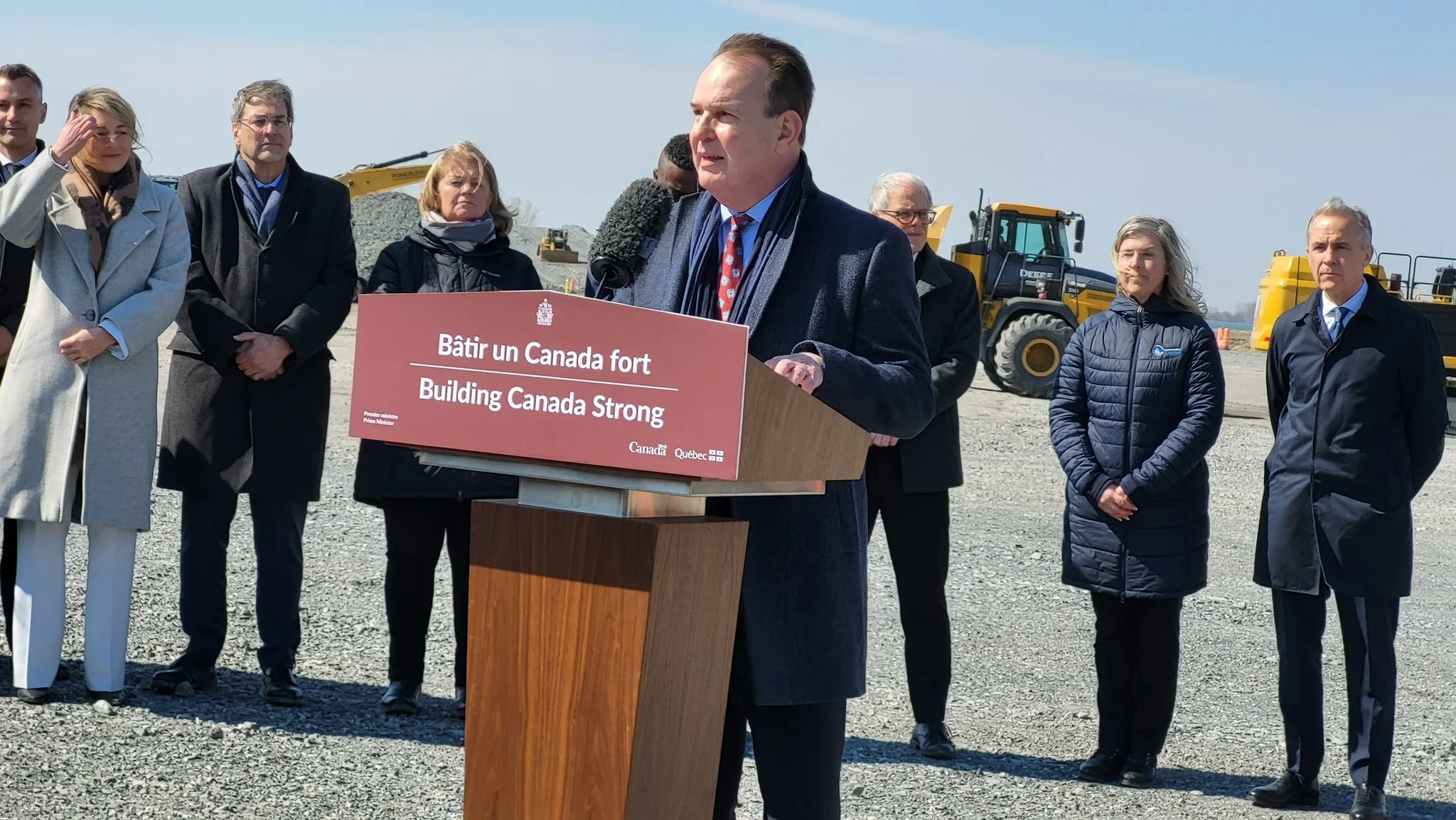
Transport Minister Steven MacKinnon said Canada has fallen behind other countries in modernizing trade systems and sharing information among government agencies and transportation operators. / TWITTER PHOTO
Businesses need greater certainty as global trade patterns shift and competition for investment intensifies, says Transport Minister Steven MacKinnon.
“Businesses are dealing with more uncertainty. Supply chains are under pressure. Countries are competing for investment, talent and market access,” MacKinnon told senators during a Committee of the Whole appearance on Oct. 6 discussing Bill C-39, the Building Canada Strong Act.
The legislation proposes changes to Canada's transportation infrastructure, federal project approval processes, trade documentation and labour relations. MacKinnon said the measures are particularly important as Canada seeks to diversify trade beyond the United States.
“Approximately 80% of Canada’s trade by volume with countries other than the United States moves by sea,” he said.
The bill would allow the government to designate national trade corridors, establish performance objectives and create a National Trade Corridors Council to identify bottlenecks and improve coordination.
“The objective is simple: fewer delays, greater reliability and lower costs,” MacKinnon said.
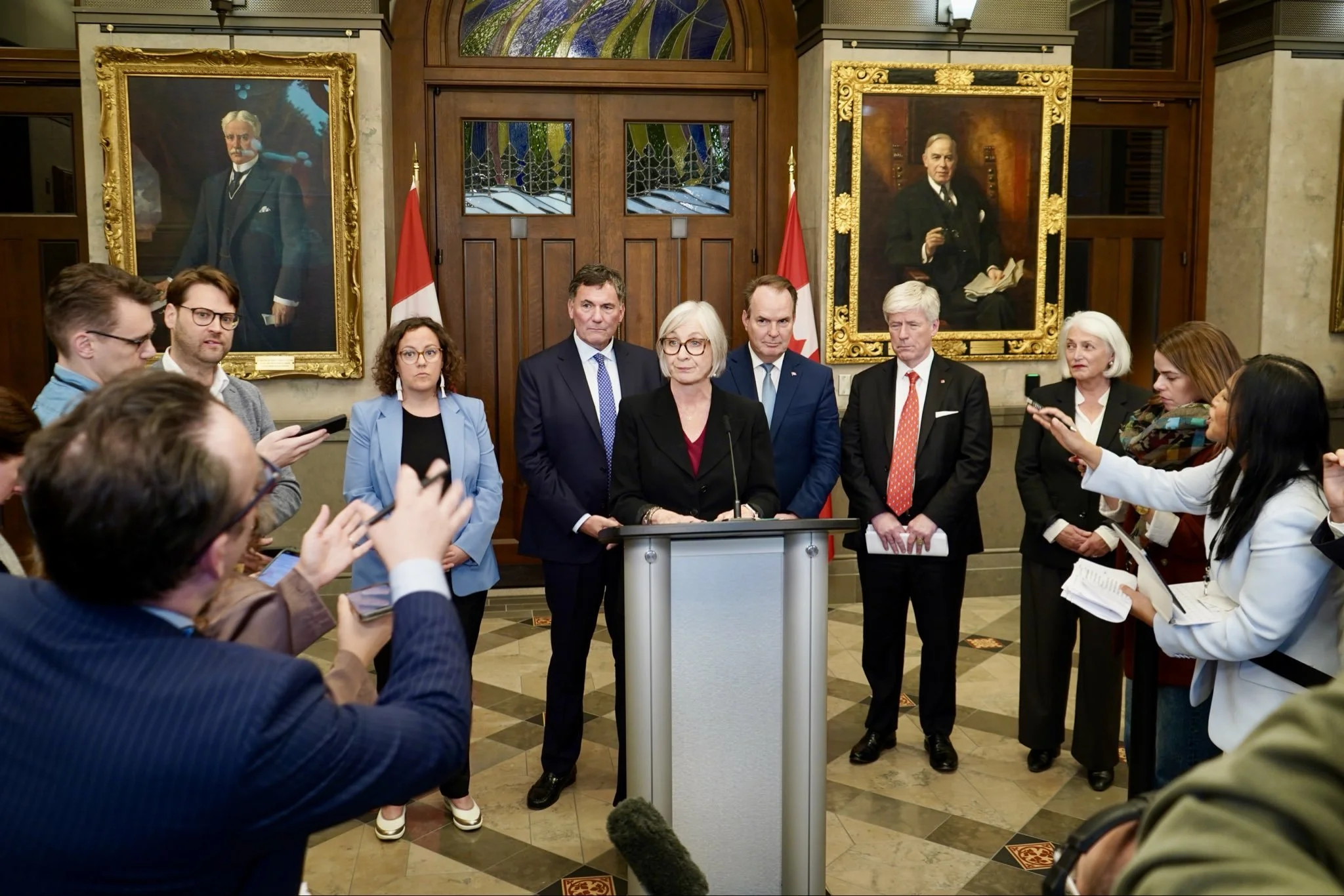
Intergovernmental Affairs and Canada-U.S. Trade Minister Dominic LeBlanc and Jobs Minister Patty Hajdu also appeared for the Senate’s pre-study of the bill.
LeBlanc said another major objective is reducing uncertainty for companies investing in infrastructure, energy and resource development. The government wants federal project decisions completed within one year and the bill would extend streamlined federal approvals to a broader range of projects.
“A simplified, more reliable and predictable regulatory framework is part of attracting that investment,” LeBlanc said.
Senator Fabian Manning pointed to the Churchill Falls and Gull Island energy developments involving Newfoundland and Labrador and Quebec, describing it as a $273-billion undertaking with thousands of jobs and billions of dollars in procurement opportunities. He asked how Bill C-39 would “assist in making this project a reality and assist in having this project reach the status of national interest?”
LeBlanc said the development could stimulate additional mining, railway and infrastructure investments. “It will unlock a series of other investments within the Labrador Trough in critical minerals and in infrastructure that will help the economy of that whole part of Atlantic Canada,” he said.
Senator Hassan Yussuff, former president of the Canadian Labour Congress, raised concerns about the right to strike. He said that while the bill has some “really good provisions,” restricting the right to strike is “disturbing.”
Ability to suspend right to strike ‘disturbing’
“Where it is disturbing — which I’ve heard from all my colleagues in the labour movement — is your ability to suspend the right to strike if there is an impasse. When that impasse occurs, there is no magic as to what will happen. You don’t need a special mediator to tell you it is impossible for the parties to reach an agreement,” he said.
Hajdu said the bill would strengthen unions’ right to strike by introducing new safeguards against premature ministerial intervention under section 107 of the Canada Labour Code, including a required special mediator’s report, while leaving the 95% of labour disputes resolved without government involvement largely unchanged.
“It cannot be a constant cycle of parties unable to arrive at collective agreements with a constant expectation on either side that the government will resolve these disputes cycle after cycle,” Hajdu said.
Senator Danièle Henkel asked about the benefits for small and medium-sized enterprises, which account for nearly three-quarters of Canadian businesses exporting goods, and whether smaller companies would benefit as much as large corporations.
MacKinnon acknowledged that Canada has fallen behind other countries in modernizing trade systems and sharing information among government agencies and transportation operators.
“In my opinion, SMEs have a lot to gain from these measures,” he said. “For an SME that wants to export, I believe that the paperwork, procedures and approvals required, along with the difficulty navigating all of that if they want to even consider exporting their goods or the results of their ingenuity, create too many barriers.”
MacKinnon said larger companies can afford employees dedicated to navigating complicated trade requirements, while smaller businesses often cannot.
“Now, with these measures, SMEs will be able to consider participating in international trade. We need them to do so.”
The proposed system would introduce a “tell us once” approach, reducing requirements for businesses to repeatedly submit identical information to different authorities. Senator Colin Deacon warned that many trade documents fall under provincial jurisdiction, potentially limiting the benefits of federal reforms.
“We can’t require provinces to do anything, but we will be working with every province — especially those provinces with ports — to ensure that the ‘Tell Us Once’ principle becomes the norm,” MacKinnon said.
The ministers also faced questions over whether accelerated project approvals could undermine environmental protections, Indigenous rights and agricultural land, although they insisted existing safeguards would remain intact. MacKinnon said the government had consulted extensively with Indigenous groups and would involve them earlier in project development. Hajdu highlighted an $8-billion investment in skilled trades training and apprenticeships.
The bill is officially at a special legislative committee in the House of Commons, which will receive stakeholder briefs until Oct. 26 at 5 p.m., and amendments until Nov. 4 at 5 p.m. Clause-by-clause study will begin during the week of Nov. 16, 2026. The Senate also agreed to create a special committee to examine the bill once it arrives from the Commons.